Glenallachie 18 Year – 2021

The GlenAllachie range was relaunched in 2018, after Billy Walker purchased the distillery in 2017. To many people, Billy Walker is the mastermind who made GlenDronach (and BenRiach) famous, with bottles from that distillery having reached unicorn status over the last years. To others, the sentiment is that Billy Walker “inherited” some amazing whisky stocks and has built his reputation on liquid for which he wasn’t around during its original distillation. Regardless of which camp you’re in, I think most whisky drinkers could agree that he has always had a talent for picking and blending the right barrels and bottling some amazing releases.


When the first batches of GlenAllachie were released, I had the chance to try most of their core range and for the most part, I was pleasantly surprised. In the last couple of years, we’ve seen a trend where new batches of GlenAllachie releases are much darker, and therefore should have a much more significant sherry influence compared to earlier releases. This is a trend that has kept me very interested, since I am huge fan of heavily sherried whiskies!


This is also what lead to me picking up the newest batch of GlenAllachie 18. It is significantly darker than its predecessor! GlenAllachie 18 Year Old is bottled at 46%, non chill filtered and natural colour. It was matured in a combination of Pedro Ximenes and oloroso sherry casks.


In the glass: Dark caramel in colour, medium viscosity. The liquid coats the glass nicely.


Nose: Delicate dried fruit notes right off the bat. Raisins coated with honey and sweet caramel. With time, the dram opens up and develops more sweet and fresh fruity notes like plum and cherry. There is also a faint citrus note.


Palate: Just as fresh as the nose indicates. The palate mirrors the nose very nicely, but it also introduces layers of sherry spice and sweetness. This is a great showcase of both PX and oloroso sherry flavour profiles. You get the sweet and candied dried fruit notes at first, and then the more savory, rich, nutty and leathery notes at the end.


Finish: Medium and drying finish highlighted by oak and even more spice. (Un)surprisingly easy drinking and it keeps inviting you for more!


This whisky is very pleasant and easily approachable. This would definitely be a crowd pleaser and not a funky sherry bomb that the uninitiated might be scared by. From what I’ve tried so far, I think GlenAllachie seems to have a signature style that is very fruit forward, compared to some older GlenDronach which was much more rich, nutty and sometimes funky. That being said, the increased proportion of sherry casks adds layers of flavour and complexity which I didn’t find in the initial releases.
While it didn’t blow my socks off, I think this is definitely a whisky worth trying and buying, especially if you want to discover how the flavour profile of GlenAllachie has evolved over the last few years. With a multitude of recent and upcoming new releases by the distillery (Virgin oak series, Wine cask series, the increasingly popular 10yr cask strength releases), there will be plenty of opportunities to make a verdict on whether or not they are trending in the right direction. For me, I will definitely be keeping them on my radar and will continue to explore their new and different releases.


Nic Bélanger
Insta: whisky_giant

The Macallan Ruby

Love em’ or hate em’ The Macallan have made themselves known as a luxury brand in the scotch whisky world and it’s a concept they embrace whole heartedly. You may find that many offerings from their line are a little out of reach for us common folk as the prices can often seem more like a real estate investment. However, outside those locked cabinets filled with flashy decanters you may notice some more reasonably priced expressions such as various triple oak bottling’s and 12 year old offerings, each catering to specific tastes and budgets but mostly out of sync with their higher end expressions. As much grief as I give Macallan for their luxury vibe I have to give credit where credits is due, those luxury offerings are often quite delicious, whether you can afford them or not is irrelevant. With their special focus on sherry casks and sherry seasoned casks they’ve commanded a mastery over the oak they use and they keep a close eye on the influence it has on their spirit.

Insert today’s luxury offering, The Macallan Ruby. Being part of the much hated 1824 series may leave the weary wanderer a little skeptical as the entry level and unexceptional Gold really had drinkers turning up their nose at Macallan. “How dare you take our money” folks cried as this one differed so drastically from what we’ve come to know from Macallan, expensive… but damn tasty. The Gold was cheap and gross. Moving on to the barely tolerable Amber and people were spitting their Macallan on the ground, demanding refunds as their reliable favourite had become a stranger right before their eyes. Luckily, redemption was in sight and folks smiled from ear to ear as the stunningly delicious and subtlety spicy Sienna took the hearts of drinkers by storm. Finally, the delightfully dark and wonderfully scrumptious shining gem of the family, the very well received Ruby. These whiskies from the 1824 series are all named after the colour imparted on them by the oak barrels they were resting in, however, it didn’t seem to work quite as Macallan had hoped. Folks were not celebrating change, they were throughly unimpressed with the decision to move away from age statements. Unfortunately, Macallan was getting called out for the wrong reasons. People wanted age statements and it didn’t matter how delicious the nectar turned out to be, it still wasn’t enough for the uninformed. If it didn’t have an age stated on the bottle, no one trusted it and most refused to give it a chance. What can be said is that the colour reflects the perceived flavour, for the Ruby that is, as deep notes of leather and polish dominate the nose while beautifully long and lasting waves of sherry flood the senses. From nostrils to jowls you can expect a full and lustrous palate with notes of toasted oak and dried cranberries, a touch of nutmeg spice and sweet raisins on the finish. It’s lovely mouth feel paired with its enormous flavour had collectors rushing out to buy the last remaining stocks as secure investments for thirsty bellies. Even at 43% you can’t be mad, you want more ABV it’s true but you can’t be mad.

The Macallan found a happy medium between highly expensive and absolutely delicious and named it Ruby.

“Hell yeahs” ripple through the crowd as thirsty bastards nod their heads in approval.

Cheers

Josh Ward @knowyourwhisky

Carn Mor 2011 Macduff – Rare Drams Cask

For those of you not yet riding the Carn Mor train I suggest you go find yourself a ticket as quickly as possible. I’d recommend starting with an offering from their Strictly Limited range since new batches from various regions are released fairly regularly. Many notable and pungent weirdos come from their line and they carry some soft and more elegant little lovelies too, all with a common trait, quality. Consistent prices and reliable picks are pretty much guaranteed and based on their consistent track record of delicious and rare drams, there’s a chance they’ll have an expression that may fit your taste and budget..Enter stage left: a lovely expression from MacDuff (affectionately known as Glen Devron or The Deveron in some circles).

This particular MacDuff was distilled in 2011 and matured in a bourbon barrel for 10 years before being bottled at a monstrous cask strength of 57.4%. According to legends, the importers, RareDrams will be picking individual expressions from other distilleries and releasing them as a mini series of sort, set to promote the core range of and individual characteristics of each distillery contained within. Lucky for us here in Alberta our portion of the cask (picked by Bob Kyle) has been released to the western market at cask strength while the rest of the cask will go elsewhere and to other markets, with no gaurentee they will be bottled at cask strength..I could go on for another six months talking about the history of MacDuff, the post war whisky boom and the additional stills that were added in the 1990’s but that’s a topic more suited for Bearded Dave, the history professor.

What we know for sure is that at 57.4% this lovely MacDuff isn’t too sharp at all, quite the opposite. On the nose are notes of dried tropical fruits and wet wood. The palate is juicy and sweet with tons of butter on the finish..A touch of water should help spare this one along for a little while longer. You may find the nose is tamed quite a bit as notes of sweet bourbon vanillas and burned butter sauce comes to the tip of the tongue with a touch of zesty tanginess in the background. The alcohol bite has been almost completely removed as hints of fresh almond comes through with a touch of musty wood on the finish.

This is a whisky you’ll probably want to drink..

Review and Photos by Josh Ward aka @knowyourwhisky

Taconic Double Barrel Maple Bourbon review

I will preface this review by saying that a) I am not a fan of almost all “flavoured” whiskeys and I was a little hesitant with this one at first. I poured this whiskey into a mini copitas tasting glass. It has a beautiful rich dark amber colour in the glass and after swirling a bit, the oily whiskey clings to the glass with slow, but thin legs.

Alright let’s get this going. I’ve let this sit in the glass for about 20 minutes. It’s something I do with most reviews I partake in. Sometimes even longer depending on age and proof.

Nose: First little whiff on the nose and it’s a touch sweet, but surprisingly I get some rye notes. The mash bill for Taconic Bourbons contain only 25% rye grain putting it in a medium rye’d bourbon. Those baking spices, nutmeg, allspice notes come through strongest up front. These notes are followed by barrel notes. The sweetness from the maple syrup soaked casks comes through with a hint of barrel char or slight smokiness. Then the bourbon notes come through with a nice citrus orangey note meshed with a nice vanilla and an almost tangy mouthfeel.

Pallet: On the palate it’s a very interesting whiskey indeed. It’s almost like the nosing notes work in reverse here. The bourbon notes hit first up front. The citrus and vanilla notes come through with a slight astringency and some tannic notes. All very pleasing on the tongue dance. As these notes start to mellow out a tinge, a nice maple note follows. With this a bit of caramel sweetness flirts about. A big surprise on the palate was the re-emergence of that rye baking spices note late in the delivery. It’s almost like the base bourbon/sweet corn and the much lower percentage rye grains are duking it out. This fight continues into the finish which was longer than expected and very pleasing. Begging you to have another sip before it fades completely. The other surprising part was that the sweetness in this whiskey wasn’t over the top in any way. I guess I expected a much more cloying sweetness but instead I got a well balanced maple influenced bourbon.

With water added…

The nose, with a touch of water, loses even more of the sweetness and brings those rye notes a bit more forward this time. The familiar (from trying the other Taconic Bourbons) bourbon notes come through strongest. On the palate with water, the sweetness shows up heavier, but still not at all cloying. More of a vanilla and maple sweetness. Like buttermilk pancakes with actual real maple syrup, not the artificial kind. With water this whiskey turns into a perfect breakfast whiskey.

Conclusion

I will fully admit again I was not going to like this at all. But the proof is in the pudding…the maple bourbon pudding. This is a fantastic and immensely drinkable bourbon. The maple barrels add just the right amount of influence on the already top notch bourbon and we are all the lucky benefactors of this unique and delicious marriage in a bottle.

Instagram: @seankincaid

Johnnie Walker Green Label 15 Year review

Ah, Johnnie Walker. The company many (though not all) experienced whisky drinkers love to hate. Sure, people covet the special releases (like the recent 200th anniversary bottlings), the Blue Label and Ghost & Rare, but the Black, Double Black and Green? Hard pass, right? Wrong!

In my mind, there is always a place for these bottles on your shelf, even if it is to share with friends, not all of whom share your enthusiasm for cask strength peated scotch. I will always stand by the Black Label (and I’m sure the Double Black when I eventually try it), but it is the Green Label which is the focus of today’s review. This is a great whisky for several reasons. First, if you are new to Scotch, this is a great introduction to the thoroughly (almost criminally) underappreciated category of blended malts as well as peated, smoky whiskies. Second, it lists the three or four distilleries that are the sources of the blend. Last, it is presented at an un-JW like 43% abv.

Which Diageo (owner of the JW brand) distilleries are represented in your bottle will depend on the release of Green Label you have. The one I am reviewing is a blend of Caol Ila (unpeated), Talisker, Clynelish and Craggenmore. The blend contains whiskies that are now younger than 15 years. It is chill-filtered and probably colored as well.

Nose: This is a light, but pleasant nose. Right off the bat, I get fresh cut apples, light sponge toffee and vanilla. There’s a little bit of smoke in here as well. This has Talisker and unpeated Caol Ila, so that’s not surprising. There is a little bit of citrus with some orange and a tiny bit of lemon. I’m not getting an awful lot of spicing on the nose apart from some cinnamon and maybe a little bit of ground coriander seed. As this sits for longer, it get’s ever so slightly herbal (cilantro) and floral.

Palate: The entry starts off light and sweet with a nice, oily mouthfeel. There’s nothing surprising here and should taste pretty familiar to anyone who has had other JW expressions in the past. It’s slightly floral with a little bit of honey and vanilla cream. There’s some flesh of an orange as well. A nice mix of sweet and sour. That sourness builds during the development with the introduction of a bit of lemon peel, very much the Caol Ila shining through there. The oak and baking spices kick in during the backend of the development. Cinnamon, ginger and a dusting of nutmeg. The experience gets a little drier as I head into the finish.

Finish: It’s short to medium in length, but has a nice amount of balance. A little bit of that honey sweetness from the entry is still detectable and helps to counteract the oak, spices and lingering sour peat from the development. Mid-way through the finish, I get a square or two of dark chocolate, but it’s presence is fleeting.

With water added…

The nose has gotten slightly tropical now. A heavy hint that the majority of this whisky comes from first or refill Bourbon barrels. There’s a touch of pineapple alongside the apple. I’m definitely getting cantaloupe as well. The ginger has come forward from the development without water added. I have never had this with water added, but I like what I’m smelling so far! The entry is just as fresh, light, sweet and slightly citrusy as before, but the peat is much more pronounced on the development. This won’t knock the socks off of experienced peated Scotch drinkers, but it’s still a nice change. The development has a bit of a surf n’ turf thing going on with the peat. There’s a bit of the maritime saltiness and sour lemon that you would expected from coastal peated Scotch mixed with earthier baking spices like nutmeg, which I get off of American peated single malts. The chocolate comes in at the very end of the finish. Making the end of the experience a little less drying that without water added.

Conclusion

Look, this isn’t a whisky that will take you to strange and bizzare new places. That is simply not what Johnnie Walker is all about. Instead, this bottle is a great introduction to peat and blended malts, the latter being a category everyone should explore more of these days. If you like what you taste here, I fully encourage you to explore Diageo’s regular distillery releases, but more importantly, the independent bottlings from those distilleries as well. You’ll find some hidden gems in there that will transform your scotch experience, believe you me!

Instagram: @paul.bovis

Dunville’s 12 Year VR PX review

46% abv
10 years in ex-Bourbon and 2-3 year Finish in PX butts and Hogsheads.

Dunville’s Irish Whiskey…..what can i say about thee…

Let’s start this off with a bit of personal history fist and then bring the facts of this bottle. I have a deep personal connection with Dunville’s that stretches back over a century. My great-grandfather emigrated to Canada in 1906 and stories circulate that he enjoyed the odd tipple from time to time. The original Dunville’s brand of whiskey was a favourite of his before he left what is now present day Northern Ireland.

I found out this information a few years ago when I stumbled upon a beautifully labelled bottle of Irish Whiskey in a green bottle. This was the Dunville’s 10 year VR PX. I instantly fell in love with everything about this whiskey. From the gorgeous floral themed label with the word BELFAST displayed, to the absolutely gorgeous whiskey inside. A 10 year Irish Whiskey that had a short yet beautiful and impactful Pedro Jiminez finish that instantly grabbed my attention and never let it go. Sadly, not long after finding this whiskey I was told it had been discontinued. Tears ensued. Then the folks at Echlinville Distillery (who resurrected the Dunville’s name and brand) reached out to tell me they were releasing a 12 year version to replace the 10 year. It did take longer than anyone would have liked to reach the “shores” of Alberta but it has finally arrived and I for one am celebrating for not just this 12 year but there are a couple other Dunville’s releases that accompanied it to Canada’s whisk(e)y mecca that is Alberta. Oh and by the way, as you can see in these photos, the bottles and labels are still as gorgeous as ever.

In the glass: Greeted by a deep gold and maybe a touch of red or pink hue. A most inviting colour to be sure. With a slight twirl of the glass, I have to wait a decent amount of time for legs to even appear, and when they do, they sit idle for a significant amount of time. When they do fall, they are even and very slow. Surely a sign of things to come. 

Nose: OOOOOOOH there it is, so familiar yet not the same. It starts off almost tropical citrus fruit sweet. Papaya and mango and even some slight notes of peaches. This rather quickly slides to more of a strawberry or ripe cherry pie note. And then the beautiful PX influence comes in strong. Citrus peels and sweet raisins (like the ones in cereals) followed by a nutty coffee note like a fruity dark roast thats been freshly ground. The spices come next with a touch of cinnamon and baking spices. Like Christmas at Grandma’s a couple days before Santa’s visit and she is hard at work prepping all the baking and food that will very soon disappear. I love a solid PX influence on an Irish whiskey nose. A bit of the citrusy fruits and some toffee/caramel along with a touch of old leather in a shop at the very end of the nose. Its everything I loved about the nose on the former 10 year but amped up and stronger. If the palate follows suit I will be in Irish Whiskey heaven.

Palate and finish: The very first thing I notice when I just sip a tiny amount to get my palate ready is the mouthfeel. It sits heavy in the mouth in weight not in hotness. In fact the 46% thats this is bottled at might be the perfect abv (if you aren’t going to bottle it straight from the cask). The first note I find is caramel drizzled apple slices. And it’s inviting for more and more. The Irish malt comes through next and I can taste some grass and maybe a hint of tea. A switch is flipped and instantly a sherry oak note comes through, firing on all cylinders. It’s spicy PX all the way. Baking spices and sweet cinnamon with a touch of dryness from the oak. The orange citrus note makes a comeback followed by that PX raisin note and even a bit of light red fruits like strawberries again. The one consistent thing from start to finish is the creamy mouthfeel and this takes it straight through to the finish. This lasts on the palate long after I swallow. The spice/oak tannin tames down and I find a nice nuttiness hanging around.  It’s still drying but my upper cheeks are still tingling with sweet spice. The nuttiness, sweetness and creamy feel meld into a double double coffee note.

Conclusion

I won’t deny I went into this one already expecting to drink a very fine Irish whiskey. What I will say is even my high expectations were blown away. The PX finish on this one has so much more of a varied influence on the whiskey than the former 10 year. It isn’t nearly as sweet either, which I like, as it truly let the various notes come and go without fighting through a blanket of sweetness. This was just the neck pour as well, so i feel that as it opens and maybe evolves a bit it might, just might, get even better. This unfortunately seems to be a limited release here in Canada, or Alberta anyways, so if you were humming and hawing over this, go grab one right now. Dark Cloud seal of approval.

Instagram: @seankincaid

Woody Creek Colorado Bourbon Whiskey review

45% Abv
Aged 4 years in Deep Charred New American Oak

Woody Creek Distillers are a new and exciting brand that will be gracing our store shelves (and home bars) very soon. They are located just west of Aspen Colorado and are very connected to their local ingredients. They have a vodka that is made from potatoes that they grow themselves. The grains that go into this bourbon are sourced from trusted Colorado farms and are then distilled on their very own custom CARL stills. The launch of Woody Creek into Alberta and Canada is being made possible by PWS Imports and there are some very unique and interesting launch events planned for the near future.

Todays spirit is their 4 year aged Colorado Straight Bourbon. They place their bourbon spirit into deeply (#3 level) charred new American oak barrels and keep it there for a minimum of 4 years.  They use a mash bill of 70% Corn, 15% Rye and 15% Barley, all of which is grown in Colorado. This release has been brought down to the very drinkable abv of 45%. This is the first in a series of reviews of the Woody Creek products that will be available very soon.

In the glass: A nice darker gold colour with a touch of orange that seems to enhance light shining through it. A fairly viscous looking oiliness that coats the glass nicely. Some skinny but long struggling legs attest to the viscosity of this dram. It looks nice and inviting before even trying to find the notes.

Nose: The very first thing I notice while just bringing the glass up towards my nose is a great oak note. The classic bourbon notes start showing through next. The honeyed spices show, with a slight cinnamon and toasted baking spice like allspice and nutmeg. As the spice wafts off, I find a unique note I have never found in a bourbon before, that of the taste of maltesers candies. A malt note combined with a bit of darker chocolate. I’m hungry now. Deep down I am finding almost a sage like note, one that reminds me of climbing the mountains in the interior of BC. A dried sagebrush bush that your leg brushes against and releases the aroma into the hot desert breeze. This is definitely a bourbon on the nose yet has some unique characteristics and one that begs to delve into fully on the palate.

Palate: Upon the very first touch on the tongue a small, quick flash of sweetness hits which is rapidly taken over by a nice spice. An almost chilli spice, that then turns to the allspice and nutmeg note from the nose. If you leave the liquid in your mouth and let it roll around and coat your whole mouth you get that spice building to an almost black pepper note. As soon as you let the dram subside and prepare for a swallow, the sweetness comes back strong. Spice turns to cinnamon and then to a beautiful honeyed caramel/toffee note. I still am able to pick out that subtle malt and chocolate note on the palate but it’s definitely less prominent and gets hidden behind the spice and sweetness of the build up on the palate. The finish is a long, slow and broodin. One that teases a build up of the spice again but it lingers instead of builds. That very first beautiful oak note on the nose comes shining through on the finish of this one. 

Conclusion

This is a bourbon that I can already tell will be a fan favourite. Its classic enough in taste that most bourbon drinkers will get along nice with this bottle. There are enough unique notes to bring in and hold the attention of the most seasoned bourbon drinkers and I can see it being very versatile in its uses from neat, on the rocks as well as in cocktails. As the first entry into the Woody Creek cabinet, this whiskey makes me even more excited to dive into their other releases.

Instagram: @seankincaid

Woody Creek Colorado Rye Whiskey review

45% Abv
100% Colorado rye grain
Aged 4 years in Deep Charred New American Oak

The next review in the series of Woody Creek releases fresh into Alberta is the Straight Colorado Rye Whiskey. This is made with 100% rye grain grown in Colorado and distilled in the Woody Creek custom CARL stills. It is then matured in new American Oak for a minimum of 4 years. As an industry standard you will know it’s the rye bottle you are looking at by the green coloured label. Why green was chosen as the universal colour for rye whiskies is still unknown to me but it seems to be the consensus to use green labels on bottles of rye whiskey.

In the glass: A beautiful golden amber colour while resting in the glass. A slight swirl in the glass and I wait….and wait…..and wait for the legs to start. I almost gave up on them when they start to droop. Very long to move and thin when they finally do fall down the glass. A beautiful colour and legs that make you eager to dip in and try the whiskey ASAP.

Nose: Okay, this did not at all start how I initially thought it would. I find a very nice citrus note right off the hop. Orange zest and lemon peel to a slight, almost fresh cut kiwi note. I can easily say one of the most fruit forward Rye whiskey noses I can remember. Getting my giant schnoz right into the glass I find a more grassy note coming through. Like the smell from a golf course in the summer heat drying the grass after a morning shower. God I love that nosing note. It takes me back to chipping in for birdie from about 80 yards out…..oh yeah. The whiskey…..there is a bit of that rye baking spice but it leans more towards the cinnamon and almost toffee thats been melted down and worked on in the front window of an old timey candy shop. A very bright and inviting nose on this one. I wasn’t expecting the fruit forwardness but am very intrigued and pleased by it. There is zero heat on the nostrils and my mouth is very saliva heavy wanting to sip it right now!

Palate: Is this a juice? Did someone switch out my whiskey with some fruit juice? I kid, but the fruit forwardness is still there upon the first burst of flavour in the mouth. A sweet fruit blend of raisins and apples. It turns slightly after holding it in the mouth for a touch into a vanilla orange slice and a bit of the rye spice begins to show up for the first time. A pinch of pepper brings the mouth to attention while the vanilla note continues to evolve into a sweeter, butter toffee creaminess. That orange peel note comes back from the nose and lingers in the back of the mouth right as you swallow. I do notice that the apparent oiliness from the legs are there as this coats the entire mouth very nicely. The finish isn’t long by any means but it is beautiful. The bit of pepper mixed with a mandarin orange oil note sticks around the longest. As in the nose there is barely any notice of the ABV at all and definitely not any heat other than the slight pepper note on the palate.

Conclusion

This again, as I have stated, was a surprise for me. A very pleasant and welcome surprise. I do tend to enjoy a lot of rye whiskey I get to try, and this one may be one of the most unique and sippable rye bottles I have tried. The initial high fruit content and lack of any heat makes me want to get into the Cask Strength version as soon as these bottles are available. It will be a nice pour to sit with and watch the game, or to keep you going through the ever earlier Canadian winter nights. You can’t go wrong with including this bottle on your shelf. I have a feeling it will be reached for far more than others currently sitting there.

Instagram: @seankincaid

Woody Creek Cask Strength Colorado Bourbon Whiskey review

59.5% Abv
Aged 4 years in Deep Charred New American Oak

After a few of the Woody Creek lower ABV sippers, I am proud to introduce one of the “Big Boys” in the form of the cask strength version of their bourbon. This is one I was very excited to have the opportunity to review as I loved the 90 proof version expression. Again the mashbill used is 70% corn, 15% rye and 15% malted barley. I found that the malt really showed well in the lower abv version and am eager to see how the extra proof on this will play out with the maltiness.

In the glass: A deep orange oil colour. Medium oiliness in the legs. Some fall quicker than others but
none disappear at all. Just swirling the glass to check colour and legs and so I can catch a whiff
on the nose.

Nose: This nose was much heavier than any of the lower abv bottles that were previously reviewed. Although there are some similarities to the 90 proof expression, there are some subtle differences as well. The initial nosing is one of oranges and sweet toffee and vanilla. Getting further into it, more classic bourbon notes appear. Cinnamon and clove along with honeyed vanilla and a slight, dark cherry. What I pick up next I was not expecting at all…a bit of nuttiness but sweeter. There it is…peanut brittle. This for me has always been more of a Christmas treat than any other time of the year and I just recently saw freshly made peanut brittle on sale in a small shop. A touch of apple skin appears upon the deepest inhales. This nose is inviting while also showing there may be a slight bite behind it. Its not overwhelming in any way but it does hold your attention.

Palate: There it is! A bit of a bite from the unadulterated proof of this whiskey hits straight away. It brings with it a nice punch of flavour as well. I like that the heaviness of the first sip is countered with sweetness from the get go. A nice honeyed toffee sweetness. A little bit of fruit shows up next. Orange cloves and apple cinnamon all together. Fruity spices lend some weight in the mouth. That maltiness that I found and loved from the 90 proof version is still there but maybe not as prominent. The chocolate note doesn’t show up with it either. Just a nice weighty malt note that holds with it a bit of the spice. Upon the first swallow that cinnamon spice kicks up a notch but all it does is make my mouth water even more. Oak tannins from the new American oak come through on the finish with black pepper and more vanilla. This holds on for a decently long time and is quite nice. The hint of peanut from the nose only starts to show a bit after swallowing and letting the finish brood for a bit. It’s a nice added touch that again I didn’t find much of at all at the lower abv.

Conclusion

What’s exceptional about this bottle is that while the higher proof brings with it more spice and heat, it doesn’t take away from the fact that this will be a sippable bourbon that can please any fan of the genre. It will stand up to ice or water drops and will be amazing in a rocks glass. Its classic enough to hold onto bourbon fans and unique enough that it won’t be boring to anyone. I can’t wait for these to be unleashed on the public and start hearing the way people take to it.

Instagram: @seankinkaid

Woody Creek Wheated Colorado Bourbon review

Let’s take a break from the core range today and take a look at a Woody Creek special release. Wheated bourbons, aside from the Weller releases (if you can find them in your state/province) and Makers Mark, were a rare sight up until a few years ago. That has now begun to change. Alongside four grain bourbons (some with oats instead of wheat), craft distilleries are leading the charge here and the expressions offer something different from the mainstream bottlings…like this one!

This Woody Creek Wheated Colorado Bourbon has a mashbill of 70% corn, 15% wheat and 15% and has been aged for six years in new American oak. It is bottled at a healthy 47% abv.

Nose: The first thing that hit me straight away was the lack of a dusty grain note that I get on most wheated bourbons. It’s not that it isn’t there, but it’s just lurking in the background. What I do get is the sweetness that I normally find in this type bourbon. Werthers original candies for sure, but also a little bit of the sponge toffee filling in a Cadbury’s Crunchie bar. In that way, it’s sort of like a bourbon matured single grain scotch. Again, this being a bourbon, I would expect to see a cherry fruitiness, but instead I’m getting strawberries and a hint of blackberries as well. In terms of the spicing, I get the traditional cinnamon and a little bit of allspice. I’m expecting nutmeg and/or cloves to show up on the palate. I’m really not getting an awful lot of oak here. As I nose this over time, I am getting more of that grain note, like sweet feed that horses love, but should not really get too much of.

Palate: With all of that sweetness on the nose, coupled with the lack of rye in the mash, I was expecting this to be overly sweet the whole way through the experience. That is initially the case, but this whiskey has some surprises in store for me. The entry is quite sweet for starters. The vanilla custard note alone really coats the front of my mouth right from the get go and that continues through the development as well. Between the entry and the development, I get that Crunchie bar toffee note again mixed with red berries and peaches, this time slightly cooked down. What really surprises me is how spicy this bourbon is on the palate. It’s not super spicy, but certainly more so than any other wheated bourbon I have had. It’s almost effervescent on the tongue. Underneath that spice is more of that grain forward note that I usually see in wheaters. The back end of the development sees some nutmeg start to creep in as well as a touch of clove. I am getting some oak, but again, not a lot. I love the balance all the way through.

Finish: The early part of the finish has quite a bit of character. The oak and dark baking spices carry over from the development and are joined by a heavy hint of dark chocolate. That Crunchie bar vibe sticks around as well. It’s slightly drying, but not overly so. As the finish progresses to a medium/long length, it becomes more oak forward, but there is enough chocolate and toffee to prevent it from acquiring that wet oak feeling that can be a bit of a put off for me.

With water added…

I’m getting much more of the dusty grain bin note as well as some faint vanilla, which I was missing entirely on the nose without water added. I’m getting some light sponge toffee, but this is lacking that Crunchie bar vibe that I was digging earlier. Definitely more oak here as well. That subtle fruitiness has also faded. The entry still has that vanilla custard, but it is tinged with orange now and slightly sour. The development is just as spicy, if not more so than without water, and more oak forward. It’s not quite as sweet either. When I smack my lips to let in some air, I get a bit of roasted peanut now. The baking spices stick around for a lot longer on the finish and the dark chocolate has morphed into a cocoa powder note that I really love. This note actually pairs better with the oak at the backend of the finish than the notes I get without water being added.

Conclusion

As Sean Kincaid has noted in the first three Woody Creek reviews, this is a surprising set of whiskies thus far. They take what you might be expecting from a traditional bourbon and American rye and throw you a couple of curveballs to keep you interested. To me, this is the definition of the craft distillery ethos. Take what you already know from drinking “mainstream” whiskey and give you something familiar, but also slightly new. Still to come is the cask strength rye. You definitely will want to tune in for that.

Instagram: @paul.bovis

Grain Henge – Meeting Creek Single Malt Whisky

Grain Henge is the brand name of the new whisky distillery from Troubled Monk, a brewery located in Red Deer, Alberta. This award winning team has been making craft beer using local ingredients since 2015. The name pays homage to the many functioning and abandoned structures littered throughout the Alberta prairie landscape that appear in photographs all over the world, helping to define our culture and identity. 

Following in the tradition of a craft beer maker, Grain Henge will be released in small batches with very limited availability. It is common practice for a craft brewery/distillery combination to share equipment in their processes, and whisky production is often planned around the brewing schedule. This means that each batch of whisky is a unique creation unto itself, and often produces exciting results. 

Meeting Creek is the first release from Grain Henge. Master distiller Garret Haynes used the mash bill from Troubled Monk’s Open Road American Brown Ale as inspiration for his first whisky release. The whisky is made with a similar combination of 2-row, amber, crystal, brown, and chocolate malts, but Haynes increased the quantity of specialty grains to accentuate the flavours he was hoping to bring forward in the spirit. The whisky was aged for 40 months in #2 and #4 charred New American Oak barrels, and bottled at 56.7%. 

In the glass: Deep amber. Appears thin, but actually coats the glass very nicely. 

Nose: Very inviting. Vanilla, with a hint of dark chocolate. Something tropical in there too. Even at 56.7%, you can bury your nose in the glass. 

Palate: The oak comes through first with a pleasant hint of almond. Caramel and vanilla too, with a touch of honey sweetness. 

Finish: Light spice from the barrel char remain. Sweet notes of honey cereal malt and chocolate linger for a long time. 

This whisky was one of the biggest surprises of 2021 for me. At 40 months old and a high abv, I was expecting something abrasive and unfinished. Maybe a good starting place for a new distillery, but nowhere near a finished product. Meeting Creek has is the opposite of all those things. It has a shocking depth of flavour and refinement, and drinks very easily without water. Pure chocolate malty deliciousness. I will be searching for another bottle of Meeting Creek (they sold out in days), and I’m very excited to see what Grain Henge produces in the future. Absolutely backup bottle worthy. I’m already on the mailing list for the next release!

Dave

Instagram – @woodley_dr

HAS BUNNAHABHAIN JUMPED THE SHARK

A Look At What The Future Holds For A Once Lauded Brand

Introduction

What happens in the whisky world when a brand we collectively sing the praises of, and
strive to have on our shelves, and in our glasses, starts to listen to their own press (or in
this case social media). Usually there is a marked increase in price, as well as a forced
scarcity for consumers which again hikes up, not only the price, but also the demand for
their particular brand. We have seen it happen time and time again. From The Macallan to
Ardbeg to Glendronach. One brand I fear is quickly joining this list is
Bunnahabhain. I will try to show you, the reader why I believe this is the case and hopefully
offer a solution or two as to how us consumers can fight this process.

The Past

When I first started my journey along the path of the water of life, I was lucky enough to
make some quick friends that were already ingrained in the Whisky Fabric. As any eager
new fan of whisky does, I would always ask what the next bottle I should look to acquire
should be. Almost unanimously I would hear the answer come back in the form of the
difficult to spell (and fearful to try and pronounce) name of Bunnahabhain and their twelve
year expression. It was quoted as a magical daily drinker at an almost too affordable price.
So of course, as a type of repayment of my dues, I too would offer up this bottle almost
without question as a great bottle that both beginners, and enthusiasts alike would agree
upon and enjoy all the same.
While my love for “Bunna”, as it is affectionately called, started with this twelve year bottle,
it only branched out from there. I soon found myself searching out ways to try as many
releases as I could. At the same time, Canada’s Bunnahabhain Brand Ambassador, Mr. Mike
Brisebois was admirably building up the awareness and profile of this brand. He did this
through criss-crossing journeys pouring for eager fans at whisky shows and tastings. One
benefit of these in person events is actual friendships were created and faces were put to
names and social media tags and collectively an army of Bunnahabhain lovers was created.
Obviously once the global environment shifted almost overnight, Mike was one of the first
to shift to being able to keep the profile of his brands and the love growing by creating
virtual experiences for fans new and established. It was through these virtual events that
more and more limited edition bottlings and rare releases were consumed and again the
folklore of Bunna grew at a rapid pace. This is what I like to call the “Brisebois Effect”.
Through Mike’s hard work and never ending passion and promotion of Bunnahabhain the
entire country has been collectively put under a sort of trance or spell. Now that Mike has
parted ways with the company tasked with representing Bunna in Canada, the current reps
are using his goodwill and results in hopes it will carry forward into the future. Time will tell
if the Brisebois effect wears off or remains constant.
One effect that this caused, was more of the limited and rare bottles were being tasted and
talked about, the word of Bunna spread and the FOMO also grew to points where people
were striving to obtain any release they could. The era of dusty Bunnahabhain bottles

sitting on shelves disappeared overnight. Every single new release was met with an
insatiable fervour to the point where no one really questioned anything when it came to
the quality of the products they were crawling over each other to get. This is seen with
quite a number of other brands currently and it makes myself and others shake our heads
when we see our friends and strangers alike posting their new bottles like trophies without
even ever tasting the liquid inside.

The Present

The present state of where Bunnahabhain stands, especially in the Canadian whisky
consciousness, is at a precipice as far as I am concerned. It’s a balancing act that I fear will
be tipping away from the general whisky drinker’s glasses and will fall more towards a
collectors shelf or bunker. Never to see a glass or even air through an open cork. We have
seen the entire whisky industry witness immense growth, both in demand from the public
as well as the wanted return on investment by the companies. Some companies definitely
seem to be pushing this more and more than others and it’s a scary time to be a whisky fan
as prices climb and quality is not keeping up. A big part of this is directly a result of the
lower demand 10 plus years ago when all these age statement whiskies were being
distilled. Now that demand has shot through the roof, the supply will not catch up any time
soon, and this will lead to higher prices throughout the industry. Obviously any
brand/distillery that has experienced an even higher rate of demand growth over the
industry average will fall victim to this quicker and harder than others. This is where I see
Bunnhabhain currently residing in terms of pricing. There are rumours aplenty (and proof
starting to show) that in my local jurisdiction as an example there will be a 30-40% increase
on the fabled 12 year old alone. One of the romantic notions about the Bunna 12 is the fact
it is available for a price that almost anyone has no issue paying for it. Its price is what
makes it a daily drinker for a lot of people.
This doesn’t even take into account the second issue caused by the higher demand than
production will see. That is the quality aspect of the whisky and releases. As demand has
skyrocketed, brands like Bunnahabhain scramble to have more releases available to satiate
the eager drinkers. What we see more and more of as consumers, are non age statement
releases replacing age statements on certain releases as well as regular releases that have
a lessened quality liquid inside due to the simple fact that there isn’t the same care and

time put into the casks during the maturation process due to the high demand. I am not
inferring that the quality has dropped beyond palatable in any means, only that there is an
undeniable effect that is bound to happen when demand for any product surpasses
availability. One side note that I must make here is that of the Independent Bottler sector
of the industry. They have been on the forefront of higher and higher prices for their
releases of Bunnahabhain into the market. Yes, they usually are single cask releases and at
cask strength, but they are also almost always still in sherry maturation and the ages keep
dropping lower as the prices grow higher. Maybe they are partially at fault for what is
happening currently in the same breath as the secondary market which is another beast on
its own…a beast that needs to be slain without mercy.
At time of writing, the disparity in pricing between provinces in Canada is laughable. Across
one single provincial line there is a $50 difference in price for a bottle of the Bunnahabhain
12 year. Will the powers that be behind the brand exploit this to justify a huge price hike in
the province with the lower current price? Will the price hike affect all jurisdictions across
the world? If so they will be pricing themselves away from a huge number of the people
that they built their current reputation on. We’ve already witnessed some divisive releases
and others that have been decent, but not mind-blowing, recently and these came with an
even higher premium priced bounty passed on to the consumer. With this all on the backs
of re-releasing previous (I assume un-sold) Limited Editions in other provinces but at higher
prices than the original retail cost, it’s becoming harder and harder to justify the battle to
acquire a new limited release. What does “Limited Release” even mean anymore? The
original releases that were deemed limited were all released under five-thousand bottles.
Now we are seeing way more than double or triple that in the Limited Releases. So was it
limited before or is it now? With triple or more bottles available and at a steep, and
continuously climbing price point, anyone can see what the end goal is. Yes, I understand it
is a business and the ultimate end game is making money, I just think there needs to be a
balance somewhere to include the maximum amount of consumers possible enjoying the
products. Alienating existing customers, especially loyal ones, is never a good move for a
brand in any industry. The whisky industry can be even more cut-throat against brands that
lose integrity in the customer’s eyes. I guess the big question is what will the customers
inevitably decide to do. Here in Canada we were already low on the list of locales to receive

allocation of these sought after bottlings. That occurs even when on a per capita basis
Canada is a leader in consumption of Bunnahabhain. So where does this end up?

The Future

What does the future hold in the grand scheme of the relationship between Bunnahabhain
and their dedicated following in Canada? There are two ways I can see this going. On one
side, you have the Customers seeing what Bunnahabhain/Distell and their reps on the
ground in this nation are doing and taking a stand against it. It can’t be one or two small
groups calling for action while the rest continue on the road already paved with greed and
FOMO. If real change in the attitude taken by Canadian supporters happens and their
overall sales start to plummet would the mother company notice? Would they even care at
all? These big brands make their living off the core range and entry level products that are
usually plentiful in shops across the country. If those core range products are price-jacked
and their sales drop off a cliff, will we see even less allocation for the higher demand special
bottlings? Will we be punished for finding other options to spend our hard earned cash on?
Does it matter all that much for those lucky enough to afford Limited Release after Limited
Release, when they can (in Alberta) order them directly from the distillery and when all is
said and done, shipping and duties paid, the overall cost is a mere ten bucks higher than
the shelf price of the limited quantity that do show up in stores six months to a year after
initial worldwide release? Time will tell what happens on the consumer side of this coin.
The Other side of the coin is the brand. The owners and reps count on the goodwill
previously established off the backs of a couple people to last through many years? Or do
they not even care, and will continue the attack on the consumers’ pocket books,
regardless of how many of their fans drop by the wayside? The recent push by the reps
across Canada to try to force a “grassroots” campaign in promoting the very lowest cost
and entry level releases by using….sorry paying influencers to produce ingenuine and
forced looking “ads” on their personal social media pages, all came across to many
observers, as a desperate attempt to spur a rush to stores to sell these products. Imagine if
they had a single sole person to do that for them in an actual genuine manner? Oh wait…..

When it comes to the future of Bunnahabhain in Canada, I do believe they will always be
here. There is a deep love amongst the whisky culture in Canada for their products. I do
also believe there will be an increase in price across the board for all their products and
that in my opinion will be a shame. I have stocked up on my favourites before the
seemingly inevitable rise happens. I also know that if they release something super special
or something that potentially would be right up my alley, I can turn to the distillery store
and have it shipped directly to my house. This by-passes multiple levels of price mark ups
and even paying asinine duties and shipping rates will still end up very similar to the shelf
price when they arrive in stores.

Conclusion

I recently made a post on my social media (January 19th, 2022) and posed a fairly similar
point for discussion. The return I received on that post was a very mixed bag and some very
hard stances from both sides of the discussion. Some said they would stay the course and
continue the undying support for Bunnahabhain, and I commend their dedication. Others
are playing a game of wait and see and will make their decision with every release that
comes and will possibly leave the core range alone as well with a significant enough
increase in price. Others still, were adamant that they have already seen the shark being
jumped and have moved on altogether, while still enjoying a core range bottle that’s on
their shelf already purchased at the long gone appropriate prices. I would absolutely hate
to see what was once said to be “an everyman’s whisky” turn into another “luxury” brand,
who only prides themselves on catering to the so called “elite”. Especially when they were
built up through the support of the everyday drinker. As for myself, I will leave you with
this. Maybe the water skis are on the feet and the tow rope is in hand. The boat is speeding
through the water and we all wait to see if Bunnahabhain does indeed jump the shark.

Slainte

Sean “The Dark Cloud” Kincaid

Glen Grant 15 – Batch Strength

Glen Grant is a Speyside distillery located near Rothes and the river Spey. It was established in 1840 by two brothers, John and James Grant. It was taken over in 1872 by James ‘The Major’ Grant, who was a legendary innovator. James Grant was the first man in the Highlands region to own a car, and under his management the distillery was the first to use electric lights and the tall slender stills that continue to define Glen Grant today. The distillery remained a family-run business until 2006, when they were purchased by the Campari group. Glen Grant continues to be one of the best selling single malts across the globe. The 15 year batch strength Glen Grant is aged in first fill ex-bourbon barrels and bottled at 50% abv.

In the glass: Light yellow-gold, appears thin. Doesn’t coat the glass, moves easily. 

Nose: Sweet vanilla and stone fruits, like peaches and cream. Soft and reminiscent of summer. Maybe a touch of lemony citrus. 

Palate: Surprisingly creamy mouthfeel. Honey and oak. Orchard fruits again, but more pear than peach. Something slightly bitter too, but not unpleasant. 

Finish: Oak and pear. Slightly drying, with an interesting pepper finish.

This whisky, on its own merit, is an enjoyable dram with some nice flavours. When you take into consideration the price of the bottle (~$85), it is almost a must-have. It is also bottled at 50%, which sets it apart from other 15 year old choices. This is an easy decision. The Glen Grant 15 deserves a spot on your shelf. It will have a spot on mine. 

Review written by Dave Woodley

IG: @whiskey_dr

Dram Mor Ben Nevis 8 year review

Dram Mor is an independent bottler located in Dumbarton, Scotland. The Macdonalds started their brand in 2019, and now ship bottles to over 24 countries around the world. The focus of this review is their 8 year old Ben Nevis expression. 

The Ben Nevis distillery is located on Loch Linnhe in the Highlands region at the base of Ben Nevis, which is the highest point on the British Isles. It was founded in 1825 by Long John McDonald, and was purchased by Nikka in 1989. The distillery focuses on 10 year expressions of its own spirit, and supplies whisky to many independent bottlers across the industry. 

This Dram Mor Ben Nevis release matured for 8 years in oak barrels, and then finished for an unspecified period in a very unique first fill white port pipe. This produced 169 bottles, and presents at a cask strength of 53% abv. This whisky is a pale yellow/gold, with a low viscosity that moves easily in the glass. 

Nose: Raisins, but not the dark sweet flavour normally found in a sherry finish. It comes across more like white wine to me.  There are undertones of milk chocolate, and some pepper in the background. 

Palate: The first flavour that presents is a salty sweet caramel. Very clear and bold, unmistakable. The white port influence comes through next. Some milk chocolate notes also, but they are quite subtle. Light smacking of the lips to allow in some air brings the chocolate to the forefront. 

Finish: The finish is more milk chocolate, creamy and sweet. There are some light oak notes too. The flavour that lingers on the palate at the end is pepper with a hint of ginger spice. 

With water added…

Softens the white wine on nose. On the palate, I get less obvious caramel and more nutty oak. The milk chocolate remains at the finish, but the pepper is muted. 

Conclusion

I am a big fan of Ben Nevis in general, and was really looking forward to trying this expression. It’s rare to see a whisky finished in a white port pipe. Unfortunately, I am not a wine drinker, and I found that the white port influences did not match my personal palate well. The milk chocolate notes that were present throughout the experience were delicious though, and the oak and pepper on the finish complimented those chocolate notes perfectly. While this bottle will not land on my own shelf, anyone who enjoys a wine or port cask finishes will undoubtedly love this release. It’s great to see independent bottlers like Dram Mor finding new and exciting ways to deliver whisky to the community!

Instagram: @woodley_dr

Eau Claire Single Malt Batch 5 review

Located in the heart of Turner Valley, Alberta, Eau Claire Distillery is part of the distilling revolution that is spreading quickly through Alberta. Open since 2014 and originally focusing on white spirits, their single malt whisky has generated a cult following among Canadian whisky fans. Their farm to glass philosophy allows them to showcase the very best ingredients that Alberta has to offer.

Now in its fifth release, this batch is a blend new Hungarian oak, ex-Sherry and ex-Bourbon barrels. There is no age statement, but has to be at least three years old and is bottled at 43% with no chill filtration or added color.

Nose: The orchard fruits stand out straight away. Fresh cut red apples mostly, but also a slice of pear. There is also a dominant, grain-forward note that reminds me of a young Irish single malt. I get a touch of barley sugar candies along with that. There is a light honey note that has settled into the background as this sits in the glass. There’s some orange in here, but it’s more like a mandarin rather than a navel orange. Ginger and cinnamon are the only spices I get. I’d say the vast majority of this whisky matured in ex-Bourbon, but there is enough of that Hungarian oak to tingle the nose a little. I can’t say I am getting any ex-Sherry influence at all.

Palate: The one thing I notice right away is how creamy this feels right off the bat. One of the creamiest mouthfeels I have had in a long while. It’s creamy honey poured over apples and pears on the entry. That stays on the palate for the whole experience. The development is all about the grain and oak. Malted cereal and barley sugar dominate initially, but then the Hungarian oak kicks in. It’s not overpowering and there’s a nice balance between the wood, the sweetness and the grain. Clove joins the ginger and cinnamon.

Finish: The Hungarian oak is nicely balanced by the lingering sweetness in a nice medium finish. Earthy nutmeg joins the other baking spices here, giving me an early Christmas vibe. As the finish progresses, I’m getting a cocoa powder note that actually builds rather than recedes. The creaminess hangs on to the end.

With water added…

The new Hungarian oak is much stronger now, as is the youthful grain note. This isn’t an issue for me seeing as I love young whisky when it’s presented like this. That barley sugar note is strong with this one now. The orchard fruits are still there, but are in the background now. The palate is still creamy, but the youthfulness of this whisky is really starting to show now. It’s too grain-forward and the oak is a little dominant for me. I’m missing a richness that I enjoyed without water being added. The sweetness barely hangs on during the back end of the development. With water, the finish is the best part of the experience. That cocoa note, which love, remains on the finish.

Conclusion

This was my first whisky from Eau Claire and I like what I see from here. The youthful maltiness and the choice of barrels really works. Too much ex-Sherry and Hungarian oak would have swamped the delicate character of this whisky. Also, I never would have guessed that this was only 43%. What surprised me the most was how creamy this dram is. I would definitely recommend this without any water added as the balance was thrown off a bit. Overall, this was everything that I love about a young whisky and can’t wait to try their next release.

Instagram: @paul.bovis

Dram Mor Inchfad 14 Year review

Inchfad is the name of a certain style of release that comes from the Loch Lomond Distillery. It’s actually hardly ever used anymore and was only used by Loch Lomond for a brief time in the mid 2000s. It was always a heavily peated release that befit the Inchfad name and this one shows that side well.

This was brought to us by the independent bottler, Dram Mor, a company who have had their first outturn in Canada recently. Mostly young to teenaged whiskies, they are showing off some unique and interesting cask profiles along with some unique distillate character from a number of distilleries. I have been fortunate enough to have tasted through a number of previous and current releases from Dram Mor and one thing I can say is they always have interesting drams to taste.

This Dram Mor 14 year was finished in a first-fill PX cask and was bottled at 54.7%. A total of 274 bottles were produced with 42 of those making their way to Canada.

In the Glass: A darker maple colour, and a nice glass coating texture. A quick swirl reveals some slow legs that seem to hug the glass nice and tight. I am already getting a waft off the glass and I need to dig right in.

Nose: An initial note of peat smoke fills my nostrils. A smoke that seems almost like it’s coming from damp wood but not oceanic wood. Oh WOW, there is a funk on this nose as soon as the peat wafts and settles. An almost barnyard funk. Like wet hay after a rainstorm has passed and the sun is shining down and trying to dry out the bails. A slight touch of vegetal/barn funk as well. This is so intriguing and I wasn’t expecting it at all, but I love it. Bring me that funk!!! Digging down and now the sweetness shows up. Definitely PX sweetness showing through now. Syrupy caramelized apples, maybe a bit of raisins in a reduced brown sugar sauce, ready to pour over some sticky toffee pudding. Some toasted maltiness comes through near the very end of the nose. Man this nose has a bit of everything, the smoke, the sweetness and oh Billy that FUNK. I cant wait to start sipping on this.

Palate: Right from the start, it prickles the tongue in the way a peppered rim of a glass from a caesar would. Then surprisingly, the sweetness comes in full force. Orange peels and caramel come in, bringing along some tartness from a cherry-like note. The ABV does not show itself except for that initial hit. The smoke starts to come through and dances around the tongue with the sweetness, transforming into a touch of old leather. A bit of ginger and cinnamon shows up just as that peat smoke starts to awaken a bit more. The funk from the nose is tamped down a but, but shows up in a malty note, almost like an oatmeal with brown sugar dusted on top, but eaten next to the barn where the animals sheltered all night. The funk man….the funk. Upon a swallow, the cinnamon and malt notes stick around for a bit, I’d say medium to almost shorter, however that peat smoke and pepper cling on for even longer.

Conclusion

This one is interesting to say the least. I don’t think this one will be for everyone and definitely not for the faint of heart. That funk is everything special to me, in my heart, that I love finding in new whiskies. The nose and palate align but differ just enough to make this a thinker. A dram you wanna sit back with and sip over an hour or so with nothing on but some Righteous Brothers on the turntable and the lights turned way down. The dichotomy of that setting with this dram will awaken all the senses and truly let this wonderful whisky shine through.

Instagram: @seankincaid

Sazerac Straight Rye review

Sazerac rye, or Baby Saz for those that are lucky enough to get their hands on its higher age statement BTAC bigger brother, is one of those quintessential ryes that everyone says you have to put on your bar shelf. However, is that the case these days? With the rye revolution in the USA firmly underway, where does this one fit now? With so many micro/craft distilleries coming out with so many interesting new or revived takes on rye, where does this one belong?

Personally, I’ve always treated this as a mid-shelf daily sipper with all of the notes that you would expect of a low-rye rye and none that you don’t. But, is that the actually true? Let’s find out!

This being Buffalo Trace, the mashbill is officially unknown, but it is rumoured (and tastes like) their low-rye mash bill. This used to have a six year age statement, but that is now gone. It is rumoured to still be in the 4-6 year age range though. It is bottled at 45% abv.

Nose: This is about a classic a nose as you can get on a low-rye, high-corn rye (if that makes any sense). I find that Sazerac has always been very barrel forward for me and today is no different. Lots of cinnamon, of course, but also a pinch of allspice. Aside from the barrel notes, there’s a good dose of the flesh and zest of a navel orange. There’s plenty of caramel in here as well. As I nose this for longer I get just a hint of cherry. Not 100% sure about that though. I am confident that there is a bit of a roasted peanut thing going on in here. This is a whiskey that has 3-4 very dominant notes right up front and you have to spend some time with it if you want to get more.


Palate: This is like an orange creme brûlée on the entry for me. Some caramelized sugar, vanilla cream and a little bit of orange zest stirred in. As much as I got a good dose of the barrel on the nose, there is a surprisingly creamy mouthfeel right from the get-go. That sweetness carries over into the development and, with cinnamon, clove and a pinch of nutmeg, it’s giving me a nice spice cake vibe that I love. The oak starts to creep into the experience during the end of the development, but there is enough of everything else that it stays in the background. When I smack my lips a little to let in some air, I definitely get that peanut note I got on the nose.


Finish: This is a decent medium finish that manages to stay fairly well-balanced throughout. The oak becomes a little more dominant, but there are enough baking spices and sweetness from elsewhere in the experience to help to tamp this down a shade. The creaminess does start to fade here and it becomes a little more drying.

With water added…

As soon as I add water to this, I get a bit of a herbal note right off the bat. A bit of slightly stale dill and flat leaf parsley. It fades away significantly if given a few minutes to settle. Other than that, I find that there is less citrus and more oak and baking spices. The caramel seems creamier this time. Like those soft Kraft caramels from my childhood (are these still a thing?). OK. Right on the beginning of the entry, this is Kraft soft caramel city. The other notes take over quickly, but there is no mistaking it. After that, I’m getting a little bit of that creme brûlée that I got without water, but the increased and earlier presence of oak is drying the experience out a little. That spice cake note has gone, but I’m getting a stronger peanut taste, almost bordering on sweetened peanut butter. The finish is a bit more drying and I’m getting more nutmeg and even some cracked black pepper.

Conclusion

I have always treated this as a daily sipping whisky and have never really concentrated on the experience up until now. I was really expecting to just give this an average review and say that there’s better out there. I firmly believe that the latter is true, but there is nothing wrong with this dram. Because of its balance, I can see why it is so popular with bartenders as a base in cocktails. I will never be able to get my hands on “adult” Saz, but this “baby” is alright by me.

Instagram: @paul.bovis

Cadenhead’s 7 Star Blended Scotch Whisky review

Type: Blended Scotch Whisky
ABV: 46%

The first thing I noticed about this was the retro-style bottle and label. That was interesting and turned out to be a premonition of sorts. The second thing I noticed was the Cadenhead’s name, which to me, and I know a fair number of fellow enthusiasts, is a sure sign of quality. The third thing I noticed was that the blend was married in Oloroso sherry casks. The last thing I noticed was the shop worker grabbing a mop for the drool pool quickly building at my feet (Ed. note…ewwwww). There has been a rumour whispered to me that Benrinnes makes up a portion of this blend as well. Hopefully they will release and confirm the parts that make up this blend.

In the glass it shows as a dark brown, almost the colour of cola with ice that has melted away. Medium legs initially both in width and length and coats the glass fairly nicely.

Nose: On the initial nose the sherry influence comes through. It shows up like musty/dusty style Oloroso. I get the scent of those 5 cent Cola bottle candies. The fruits start showing up a little deeper. Figs and raisins. The nose comes close to an almost Campbelltown funk. Not heavy at all, but a slight touch of smoke. Could be barrel usage but the nose is earthy, dunnage floor like. Maybe a bit of baking spice at the tail end of a big whiff. For a blend of grain and malt and at a decent price point this nose is very interesting and punches above its weight big time.

Palate: The initial entry is brighter than the nose foretold. Some grain showing through for sure. After a short bright burst it tames down a bit to get more of what’s expected after that nose. When the full palate is coated, the nutty side of sherry influence show up. A waxiness and heaviness is noticed and it almost turns into a really dank sherry whisky, but then the lighter side of fruits make their case. A touch of red delicious apples with peels on. Some cherry and sultanas with a bit of syrup coating on them. Even some chocolate and cinnamon on the roof of my mouth.

Finish: The finish on this one is intriguing. The spice and brightness perk up but once they start to fade, that nutty, fruity Oloroso is right there and clings for a while. It meets with the bit of spice kick and almost turns to a chocolate covered cherry. It sticks around much longer than I would expect and I am very happy with this surprise. It’s a sherry influence blend that avoids being over sherried and allows all aspects of the whisky to shine through at different times.

Conclusion

This is a blend that I will keep fully stocked in my cabinet as long as it’s available. It’s a delicious, interesting and fulfilling blend that punches above its weight and already changed by sipping it over the course of an hour. I can’t wait to see how it opens up with some time in the bottle. It’s reminiscent of some older style blends I have been lucky enough to try. Cadenheads revived the 7 star to showcase that a blend can be created using their vast array of top quality casks they have maturing in their warehouses and this one hammers the nail on that point. 

Instagram: @seankincaid

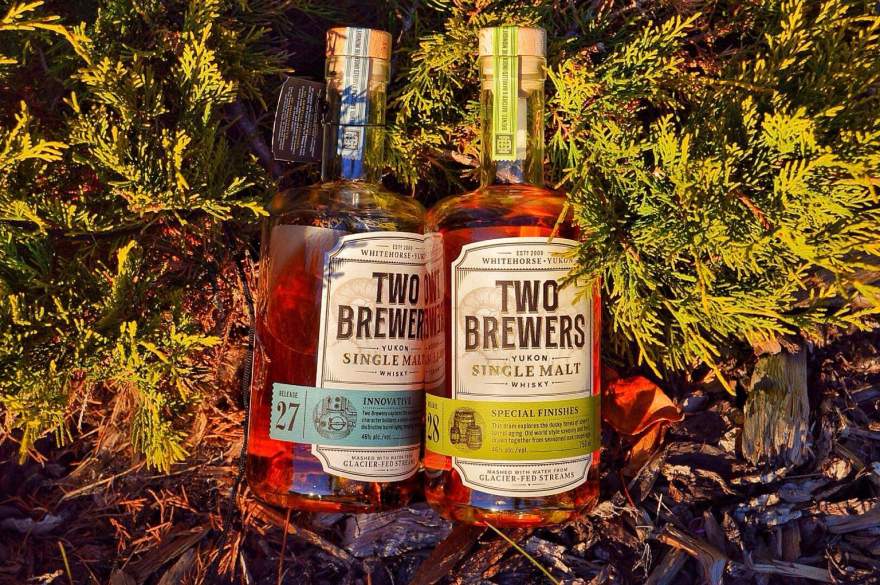
Two Brewers Release 27 and 28 review

Two Brewers Release 27

Type: Innovative
ABV: 46%
Released: August 2021

It’s no secret that I have an immense love for all things Two Brewers. From the people behind the brand, to the always increasing profiles of their whisky, to the absolutely unique and interesting things that they continue to try with each release, it easily takes my top spot of all Canadian whisky brands.

Release 27 is exactly what I am talking about. If you know the story behind how Two Brewers started, and clearly by their name itself, it was started by the people who were already established in the beer business with Yukon Brewing. They took that background and absolutely shoved it into the formation of this whisky.

Release 27 has Vienna, Munich, Honey and roasted malts. These are all primarily malts used almost exclusively in the beer brewing industry.  Some of this whisky started out in virgin oak barrels to start, and then spent the rest of its time in ex-Bourbon barrels. They were married in ex-peated barrels for 19 months.  It has 6, 7, 9, 10 and 11 yr old mashes in it with roughly 1/3 being 10 years or older. Yup I’d say that’s pretty experimental and unique cask usage and now I will let you know what all of this ends up like in a finished bottle of whisky.

In the glass, this has the appearance of a lighter Red style beer (hehehehe) with medium to long legs that slowly fall down the glass.

Nose: This hits with malt up front. I guess that’s not a surprise knowing what’s making up the whisky. There is some nice honey sweetness. Almost like a raw honey type note. Behind that follows some vanilla and caramel. Funnily enough, as I start to pick up the wood/cask influence I also get a whiff of fresh dark roasted coffee. I swear I pick up that fresh virgin oak cask influence right at the end on a deep inhale. The nose on this whisky has me curious and very interested in diving in. 

Palate: First sip and immediately I get all that malt up front as well. Malt with a honey glaze over it. Like Honey Nut Cheerios with extra honey. There’s a slight tingle and even though it’s only 46% abv, it almost drinks heavier, which I am totally okay with. This whisky reveals layers upon layers as it moves back on the tongue. I swear I can taste a faint actual beer note on my tongue right now. Bourbon type notes pop up mid palate, some dark fruits mixed with a slight blood orange/mandarin taste and then that spice from virgin oak comes through. Cinnamon and clove and a slight hint of spiced up toasted coconut just as it starts to fade into the finish.

Finish: The finish on this beautiful whisky carries the spice notes through and the sweetness returns with that mandarin orange and cinnamon. This is the only time that I even slightly think I catch a whiff of any smoke at all, but it’s long after the swallow and it’s found on the residual flavours left in the mouth.

Conclusion

Wow. What a whisky. Layers, balance, beautiful cask usage, experimental malt usage. The proof is in the bottle. Literally for me as this one is being drank faster than most bottles I open. I am saying right now, this is my sleeper hit of the year in whisky. I love this bottle!!

Two Brewers Release 28

Type: Special Finishes
ABV: 46%
Released: September 2021

This one is a mix of 7 year old and 10+ year old mashes. All of the Whisky is a standard malted barley mash. It spent 5 months in virgin oak barrels, then it was moved to ex-Bourbon barrels. Finally, it spent 2 years in Hungarian oak sherry barrels. After spending 2 yrs in sherry barrels, it was blended with a standard 12 year old mash. Clearly this is NOT your standard sherry casked whisky.

In the glass this has a dark copper to light rust colour. Thin but long lasting legs coat the glass and clearly hint at an oily masterpiece awaiting me.

Nose: On the nose I am immediately hit with familiar sherry notes, but not at all a sherry bomb. This is dusty sherry spice-coated fruits with a nice malt backbone. Even the fruits aren’t the typical plums, raisins and prunes. Brighter fruits, more lush ripe juicy fruits. I even find a faint note of Nag Champa incense at the tail end of the nose. That sherry sweetness fills out the very end of the nose right before I take another whiff. I have no idea what to expect on the palate now but I am excited to find out.

Palate: Just a small sip to wet the palate and the beautiful sherry spice comes across strongest. Very mouth coating and viscous. A bigger sip and let it rest a bit and the fruity side of sherry comes through stronger. But again, I’m not finding the typical darker, drier fruits. Juicy almost sub-tropical notes of creamy ripe mango, like a mango milkshake. I also get that Hungarian oak spice with some added cinnamon. There is also a slight saltiness, which I can’t explain but it’s there, sitting right after the spice. There is a beautiful play between that salt and the sweetness and it’s gorgeous. As this starts to fade on the swallow, that spice and salt meld as they fade and turn into a salted dark cocoa/chocolate note. I find this as I chew on the finish and let it build up again.

Finish: The finish is long and bold and that dusty old style sherry finally shows right at the end and that cocoa/sherry is what carries on through the whole finish.

Conclusion

This one on first sip was surprising as it wasn’t at all what I expected from the sherry casking. I am so happy it isn’t a simple sherry cask whisky. This one you need to sit with and contemplate. This isn’t a background whisky at all. It needs your attention and demands it. Two Brewers shows, once again, why they deserve to be at the top of the Canadian whisky landscape. No one else is doing the things they are doing and we are the lucky recipients of release after release of absolutely stunning whisky. Look for a future review of release 29 which the cold northerly air has whispered to me could be even more special than normal.

Instagram: @seankincaid

SINGLE CASK NATION WESTPORT 2005 (16 YEAR) REVIEW

What is a Westport anyway? Or a Williamson? Or Orkney? What’s going on here? Last we checked, these aren’t distilleries in Scotland. Or are they? Welcome to the world of distillery aliases. Westport is Glenmorangie. Williamson is Laphroaig. Orkney is almost always Highland Park. A few brands, especially those with a sizeable official bottling line are very protective about when independent bottlers can use their name. In these cases, they still sell on their casks to brokers and bottlers, but under an assumed name, if you will. There’s a bit more to it than that, I think, but as they say at my job, it’s good enough for government work!

This is our last SCN review for a little while, but I have to say that this initial release has been pretty epic. I doff my cap to Single Cask Nation for ignoring the roaring sherry trend and going with mostly second fill casks including many ex-Bourbon bottlings. Those ones, in particular, have been very illuminating for me. This Westport was distilled in May 2005 and dumped into a 2nd fill Oloroso Sherry Butt. It was bottled in May 2021 at 50.6% abv with a total out turn of 577 bottles.

Nose: This has a very citrusy nose with the zest and flesh of an orange. Some pineapple is in there too. I’m having a bit of a hard time digging past the citrus initially. Once my nose acclimatizes, I get a few Oloroso notes, but they are quite muted with this being a second fill cask. There’s a little bit of dark chocolate and some sultana raisins. I’m getting the faintest whiff of Christmas cake. It’s mostly cinnamon and ginger for the spicing. Again, the refill cask is, not surprisingly, giving me very little oak. As I nose this over time, I get a little bit of light honey and some Gala apples.


Palate: Quite light and sweet initially. Definitely a very strong Glenmo vibe off of this one for sure. Citrus, honey, crisp apples and a bit of toffee on the entry. The development gives me a bit of that Christmas cake note that I got on the nose as well as a good hit of baking spices. Those are earthier now with a nice hit of clove and nutmeg. There’s maybe a bit more oak than I usually like on the back end of the development, but this is a 16 year whisky, after all. There’s enough spice to tingle the tongue, but it’s not overpowering in any way. Overall, a nice balance here.


Finish: The finish is medium to long and only a little bit on the dry side. The oak is not too dominant and is balanced nicely by the remaining sweetness from the entry. The baking spices fade mid-way through the finish leaving oak and bit of dark chocolate at the end.

Conclusion

This is certainly a very good whisky in its own right, but out of all of the SCN releases I have reviewed recently, I find myself gravitating towards the ex-Bourbon matured expressions. My favorite of the six that we reviewed here was the Teaninich, which is the first one I tried. I hope that scotch lovers keep their options open to ex-Bourbon expressions such as these, rather than just going by the color of the liquid in the bottle. After trying these SCN releases, I’m definitely a convert!

Instagram: @paul.bovis

SINGLE CASK NATION BLAIR ATHOL 2011 (10 YEAR) REVIEW

Aside from comments on social media or in online tastings, this is the first time I’ve attempted formal tasting notes. As a relatively new whisky drinker, this is an intimidating task. It is especially nerve-wracking to be asked to post a review on the Park Whiskey Society website, which is a page I have gone to for over a year to read about some of the amazing options available to whisky lovers here in Alberta. 

When I first found this site online, I was amazed with each individual’s ability to detect such a wide range of scents and flavours in each dram. As a novice, I could only really pick up on sweet, spicy/peppery, smoky, or “holy crap that burns my eyes”. To read someone commenting on vanilla, or stewed fruits, or lemon zest made me feel like a very inadequate member of the group. 

It’s amazing what a few months and a few dozen (hundred?) drams can change. My best suggestion to new whisky drinkers: join a group like the Park Whiskey Society. There are many local whisky club options, and the people in these groups are generous, kind and always willing to share a sample or an opinion. Also, get involved in as many whisky tastings as you can. When you find a whisky you like, buy it. If it’s a limited release or special cask, buy two. You’ll regret it if you don’t. 

Single Cask Nation is one of the most successful independent bottling companies in the world, and they have very recently returned to the Canadian market. They have provided 6 distinct releases in the last 3 weeks, including this beautiful Blair Athol which spent 10 years maturing in a 2nd fill PX sherry butt. Blair Athol is a small Highland distillery that primarily supplies whisky for the popular Bell’s blend in Scotland. This whisky is bright copper in colour, and is bottled at a generous 55.3%. 

Nose: Sweet fruits, but more subtle than a traditional PX cask. A hint of musty malt that reminds me of the old bookshelves in my grandma’s basement. In a good way. Something else sweet too, like the inside of a candy bar. I spent a long time nosing this whisky. It’s complex. 

Palate: Rich and sweet, quickly turning to a ginger spiciness. This is followed by cereal malt, and hint of dark chocolate bitterness. The high abv might make it too hot for some. A couple drops of water mellowed the malt and spice and brought out something that reminded me of Christmas fruitcake. 

Finish: Medium-long, with lots of spice. Again, more ginger than pepper. The fruit at the end is cherry or cranberry, and leaves a very pleasant aftertaste. 

This is one of my favourites of the SCN initial releases. It is more complex than your average PX sherry bomb. The combination of the sweetness from 2nd fill sherry cask, the mustiness of the malt, and the ginger spice allows this dram to activate and please the entire palate. 

I am still learning about my own personal palate, and the unending flavours that appear across the whisky spectrum. You may agree with the notes above, or taste something completely different. But I know what I like. And I like this whisky. The SCN Blair Athol 10 is backup bottle worthy. 

Instagram: Dave Woodley (@woodley_dr)

Single Cask Nation Glen Elgin 2010 (10 year) review

This being my third Single Cask Nation review, I’m starting to see where their philosophy lies. Looking at their releases in the Canadian market at least, roughly 3/4 are from second-fill barrels. This has allowed me to discover the true nature and character of each distillery with the cask only providing a light touch. First-fill ex-sherry is very much en vouge at the moment, but SCN is bucking the trend in this regard. Will it catch on?

This Single Cask Nation Glen Elgin 10 year old was distilled in March 2010 and was matured in a second-fill ex-Bourbon hosghead. It was bottled in October 2020 at 61.3% abv with a total out turn of 293 bottles.

Nose: A very fruity nose that goes in all kinds of directions. Most prominent is pineapple, but orange is not far behind. I’m getting quite a bit of zest, but also the flesh or an orange as well. Lying underneath are some crisp red apples. I’m mostly getting ginger for spicing, but not a whole lot else. Not surprising as, like the Teaninich and Tomatin before it, this is a second fill Bourbon hogshead (or barrel in Tomatin’s case). I got a little bit of a white grape note when I first poured this, but that has almost completely dissipated now. There is a small amount of vanilla. As I nose this over time I discovered a faint toasted sugar note. Nothing to report in terms of oak. Once again, this is very distillate forward. I see a trend forming here with the SCN releases. They’re wanting the distillate to shine through.

Palate: Almost right away, I’m getting pears poached in syrup. Almost stronger than I got on the Teaninich. The first sip was shockingly easy to drink. On the first couple of sips, that pear note was almost too dominant in its sweetness. On subsequent sips, more notes come forward to balance this out. My tongue is starting to tingle so I have to slow down. Initially, the nose is light and sweet with honey and a little citrus zing. Then the orchard fruits start to come forward during the development. Mostly pear, but now joined by apple. Then I get more citrus mid-development with a good amount of ginger and clove as well as a sprinkling of black pepper. I’m surprised how much oak I’m getting on the back end of the finish, but it’s well balanced and not overpowering in any way.

Finish: A lovely long finish with a little bit of everything. First a bit of oak and fading spice from the development. Then the apple and pear comes back along with a little bit of dark chocolate. Lastly, I get a faint hint of citrus that makes me want to go back for more.

With water added…

I’m not getting as much apple on the nose and the pineapple and orange have been turned up a little. I’m getting some cinnamon along with the ginger now. About six drops of water to my remaining ounce of this has allowed me to get much deeper into the glass. It’s calmed down the alcoholic bite quite a bit. On the palate, the orange is balancing out the apple and pear a lot more on the front end of the development. The added cinnamon that builds through the experience is giving this a bit of an apple pie filling vibe. The skin is still on the apples, giving it a slightly bitter note. The finish hasn’t changed an awful lot, but the spice stays around for longer.

Conclusion

Before I tried these three SCN ex-Bourbon barrel releases, I was very much in the sherry bomb and peat monster camp. I’m still very solidly in those two camps, but these samples have opened my eyes to just how magical ex-Bourbon cask matured whisky can be. The tropical and orchard fruits just shine through, particularly in these SCN releases and has me wanting more.

Instagram: @paul.bovis

Hinch Peated Single Malt review

Nestled in the rolling hills of Co. Down just south of Belfast on Killaney Estate lies a whiskey distillery that has big ambitions and the people and passion to back it up. Founded by Dr. Terry Cross who also owns the Bordeaux winery Chateau de la Ligne, Hinch distillery is a world class facility that spares no expense in the pursuit of making their mark on the world stage.

Since they have only been laying down their own new make spirit in oak since late last year, they are sourcing their whiskies for now. A fact they have been completely transparent about. Called their Time Collection, their five core releases include age stated expressions, a small batch entry-level bottle and a traditional Irish pot still with a small amount of oats in the mash. Our focus today will be on their peated single malt. For the longest time, Connemara stood alone as the only peated bottle you could find on the Emerald Isle. Now, you probably need more than two hands to count them all. And you’re going to need a lot more hands in the future, that’s for sure.

The Hinch Peated Single Malt has ben matured for at least for years in first-fill bourbon casks from Kentucky. It was bottled at 43% abv. Both Sean Kinkaid (@seankincaid) and I will be letting you know what we think of this one.

Sean Kincaid’s review

In the glass the light color is the first thing I notice. Whether it’s youth or the type of casks used, we shall determine.

Nose: The next thing I notice is the smoke notes wafting over the table to my nose. There’s definite peat smoke, more along the earthy, mineral type smoke and seemingly quite strong. As I bring the glass to my nostrils, I am picking up a sweet peat along with a floral sweetness. Almost to the point of being botanical. That could be from the youthfulness or maybe just the distillate has some floral notes in it. The smoke is like if someone extinguished a bonfire on a wet beach but using pine tree branches and some flowers to put the fire out.  I also get a good dose of citrus fruit off the nose. Tangy and bitter, like orange peels or grapefruit. It almost reminds me of the younger bourbon-matured Kilkerran/Glengyle style peat influence without much of the Campbelltown funk. This nose is so interesting I keep going back for more.

Palate: First thing I notice is the citrus fruit notes. With the peat not far behind. A more standard peat note than on the nose. Very citrus forward and easily reminiscent of Islays output. For what I assume is a rather young peated single malt this has a great mouthfeel. Silky and not overbearing. More wet beach smoking fire notes. That grows more earthy and minerally with time. Still a touch of that floral impact kicking around that could almost lean towards a herbal type note. A touch of salt. Not brine but, salt. Like salted honey.

Finish: The peat smoke and citrus/floral notes fade with a medium finish. On the finish is the only slight tingle I get at all. The lasting note is almost a salted sweetness with a slight twang from the peat. Again super interesting to me. This is only my second time having this and the first time having it on its own. I am glad I have more left in this bottle to come back to.

Paul Bovis’ review

Nose: This is a peat lovers dream for sure. It’s not Laphroaig levels of medicinal, but it is leaning that way. It’s salty and briny. A good dose of iodine in there as well. This is a very sea breeze across a tidal flat for me. There’s a bit of a salty sea shell mineral note and an underlying sweetness of vanilla and toffee. As I dig deeper, there’s a bit of wet dirt and earthy spices such as clove and a bit of nutmeg. Might be just the faintest whiff of that Hinch shortbread cookie note, but I may be overthinking it. Wonder if I will get more of that on the palate?

Palate: A lovely evolution. The entry is oily and mouth coating. Surprisingly so for its 43% abv. The peat doesn’t hit you straight away. It builds slowly through the development. Initially, there is a lovely hit of everything I love about Hinch’s sourced whiskey. Lots of vanilla and toffee as well a big dose of shortbread and digestive biscuits. I’m also getting that malted cereal note as well. As the development progresses, the peat starts to creep in. More of that “surf n’ turf” that I got on the nose. The saltiness shines through as well as a bit more of that wet dirt and a slice of lemon peel. What I love so much about the mid part of the development is this perfect marriage of peat and that Hinch shortbread note that I have come to love. Earthy baking spices and oak round this out. There is enough shortbread at the end to balance it out.

Finish: Mostly a continuation from the development. There’s a nice, spicy kick initially. The baking spices are joined by some cracked black pepper. The oak tastes a little bit wet, but there is enough of the spice and shortbread to temper that a bit. The sweetness fades about half way through the decent medium finish, but I don’t find the wet dirt, baking spice, oak combination to be off-putting. They’re mostly in balance with each other.

With water added…

I would say the peat is even stronger now, but the shortbread note is much more pronounced as well. Peated shortbread. Is that a thing!? It’s more salt and brine than iodine. Water hasn’t helped on the palate. It’s not quite as rich on the entry or as mouth coating. Also, there is a bit too much of that wet oak mid-palate, which throws things out of balance. The finish follows from that and it’s too oaky for me.

Paul’s conclusion

I’m hard pressed to say if this is my favorite Hinch expression or the Pot Still. They both have so much flavor, texture and character. I’m of the mind to have this without water, but I always add some at the end, just to see how things turn out. Without water, there is an almost perfect balance everywhere. I am a big Laphroaig fan, but I would reach for this Hinch Peated Single Malt any day over the 10 year. It’s that good.

Instagram: Sean Kincaid (@seankinkaid) and Paul Bovis (@paul.bovis)

Single Cask Nation Tomatin 2006 (12 year) review

Unlike the Teaninich that I just reviewed, Tomatin is definitely a familiar name if you have perused the whisky shelves with any frequency. From the Legacy, all the way through their high age stated bottles, Tomatin is a very familiar and affordable Highland scotch whisky. Tomatin likes to advertise themselves as “The lighter side of the Highlands”. This moniker may hold true when it comes to their official bottlings, but that is not case if you pick up an independent bottling of the stuff. I found this out in a big way when I reviewed this zesty little number!

This Single Cask Nation Tomatin 12 year was distilled in 2006 and matured in second fill bourbon barrels. It was bottled in 2019 at 58.1% abv with an out turn of 219 bottles.

Nose: For a second fill bourbon barrel, I’m getting quite a bit of vanilla. Even stronger than the expected tropical fruits is the fresh cut apple note I’m getting right off the bat. I have to say, for such a high abv whisky, I can really get my nose pretty deep into the glass. This nose is quite cereal rich for it’s age with a good amount of barley sugar thrown in for good measure. As well as pineapple, I’m getting quite a lot of citrus oil expressed from a fresh orange. A grapefruit note comes up after a while in the glass. As far as spicing goes, I’m getting quite a bit of ginger and a hint of cinnamon.

Palate: I was expecting a wave of citrus here and I get that big time. The entry, after the first couple of sips, is quite measured and sweet with honey and vanilla wafers before a wave of citrus breaks early in the development. This, along with its high proof really tingles the tongue so I would sip this slowly if I were you! The sweet and sour note continues throughout the entire development with the latter transitioning from orange to grapefruit as the experience progresses. That maltiness and barley sugar continues from the nose and apexes during the mid part of the development. The sweetness fades during the second half of the development, but doesn’t disappear completely. The spice builds to a crescendo at the end of the development with cinnamon, ginger, cracked black pepper and clove. There just a bit of oak at the end, but it is pushed into the background will all of this spice.

Finish: This is a very long finish that is spice and citrus forward. Most of the spice and sweetness fades during the first half of the development. This leaves the citrus to continue the journey alone for the most part, with some oak tagging behind it. The tail end of the finish is a little bit sour and bitter in equal amounts. It’s not in your face. Not all whisky needs to end with a sweet note.

With water added…

This has become a bit floral now. The vanilla remains, but I’m not getting as much apple as I did without water added. I’m still getting some of that nice maltiness. I’m getting some earthy allspice and the ginger has faded quite a bit. The cinnamon remains though. A nice digestive cookie note comes out after some time in the glass. The palate still possesses quite a bit of citrus zest, but there is more sweetness to balance it throughout the entire development. The sweetness is mostly a rich honey. On the second half of the development, the spice is still pretty strong, perhaps even stronger than without water. Interesting that I am getting a bit of apple, starting mid-way into the development and continuing into the finish. This is still quite a spicy, citrusy finish, but that extra apple and honey sweetness helps to balance things out a bit more. The finish is still sour and bitter, but there is enough sweetness there to right the ship a little.

Conclusion

This is not a whisky that everyone will enjoy. If you are dead set against adding water to your whisky, you had better like a good dose of citrus. The addition of water and the added sweetness it brings really transforms this one quite a bit. To be honest, I’m glad that the Teaninich I just reviewed and this one are so radically different. Seeing that these two are both from second fill bourbon casks of some sort, and thus quite distillate forward, you get an idea just how diverse Highland scotch whiskey can be.

Instagram: @paul.bovis

DINGLE SINGLE MALT IRISH WHISKEY REVIEW

The Dingle Peninsula, as a whole, is probably the most beautiful place on earth I have ever been to. I seriously left a piece of me behind on the bluff overlooking Dunquin Harbour. The town of Dingle is magic personified in a small town. From the B&B’s that are literally on top of the pubs on main Street (Strand Street) to the pubs that double as a hardware store, to the distillery found just outside the town. If you do find yourself lucky enough to visit heaven on earth in Dingle, make sure you take a drive out along the Sales Head drive from town and stop at Dunquin Harbour. Just stand there and take it all in. 

I have been lucky enough to try all 5 batches of the Dingle Single Malt that have been available (Batch 6 just released in Ireland recently) and I have liked every one. They are fairly youthful yes, but vibrant and exciting. The varying cask usage between batches also kept me on my toes. I liked a couple more than the others but they were all up my alley in terms of palate.

Now to the bottle at hand. The first thing I notice is the packaging. A striking dark navy blue with gold foil trim including a more prominent logo that I call “The Dingle Man”.

Bottled at a very nice 46.3% abv and non-chill filtered, cut down to bottling proof with water from their own well 240 feet below the ground.

In the glass it has a nice golden honey hue with a slight touch of red on the edges. Very skinny but super slow legs on the glass as I twirl. Just begging for a nose and a taste.

Nose: On the initial nose there is a familiarity evident immediately.  That Dingle sweet malt note that I do really like. Sitting side by side riding shotgun is a fruit sweetness. Like a creamy strawberry, and a bit of tart fruit that I find in most Dingle releases. Like a sugar coated rhubarb stock that I used to eat as a kid. The PX casks add a heavier fruit note deeper down. A touch of spice comes through with some time in the glass. An underlying nutmeg, and citrus. Like a slice of sugar dusted orange peel or lemon slices in tea. This is more complex than I would have predicted.

Palate: On the initial sip, the immediate note I pick up is the salted/spiced toffee and vanilla. It’s clear the bourbon casks used are top tier. They show up in Spades right off the hop. There is some spice here for sure. Some white pepper, and again the nutmeg almost reaching to cinnamon. The fruit notes come through after. Starting off with orchard fruits. Caramelized apples and stewed pears with the honey and vanilla. This starts intermingling with a bit of the sherry fruit sweetness. Bringing along fall/autumn fruits and that herbaceous feeling. The most unique note I find is a slight chocolate leading to a fresh roasted coffee bean note. This caught me by surprise and I really like it.

Finish: The spice has come back again. Almost tingles down and then back up on to the tongue. More of the salted honey and pepper with a touch of cinnamon. This one has a bit of everything but never feels disjointed. It evolves instead of fighting itself. And it leaves me feeling satisfied.  I need to keep reminding myself that this is their core release which is readily available and will not disappear quickly like previous batches. Being only roughly 5 to 7 years old there is definitely a touch of youth that shines through but it’s not off putting in any way. I also do love that there is still an evident “Dingle” note found in this bottle, which ties it in with the batch releases.

CONCLUSION

As I finished this glass off, I kicked back and looked over at the photo that I took myself, that is now poster-sized and hanging in my kitchen of Dunquin Harbour. I pictured myself with this bottle sitting on the bluff up above the winding pathway, the wind blowing in off the ocean and just taking it all in as I was so lucky to do once before.

Instagram: @seankincaid

Single Cask Nation Teaninich 13 year

Today we start a series of reviews on the Single Cask Nation bottlings that are starting to hit the shelves here in Alberta. Single Cask Nation started as a discussion between friends. This quickly progressed into one of the most popular independent bottling companies in the world.

What we have in the glass today is from one of many hidden gems in the vast Diageo portfolio. Teaninich distillery hails from Alness in the northwestern part of the Scottish Highlands. Its whisky is mostly used for the Johnny Walker line of expressions along with an occasional release as part of Diageo’s Flora and Fauna series. Teaninich is starting to become popular with independent bottlers recently and it’s not hard to see why!

This Single Cask Nation Teaninich 13 year old was distilled in 2005 and bottled in 2019 at 56.2% abv. It spent its entire maturation in a second fill bourbon hogshead with a total outturn of 277 bottles.

Nose: This is an ex-Bourbon matured Scotch as I live and breathe. I feel like I’m walking through a fruit market somewhere in the Caribbean. Very fresh and crisp notes in that regard. Pineapple is the standout, but that is joined with a healthy dose of the flesh of a fresh coconut that has been just been cut open. Fond memories of the Dominican Republic and Hawaii creeping in there. Fresh ginger root and orange zest features prominently as well. As I nose this over time, some ripe pear comes into focus as well as a bit of a digestive biscuit undertone. The toffee and vanilla are very light. It is really about the tropical flavors on this one. I have to say that as I have been nosing this over the past 20 minutes or so, the orchard fruits (pear joined by apple) are rising up to meet the tropical ones.


Palate: The entry is immediately tart with freshly chopped pineapple and mandarin orange. Ginger and cracked black pepper bring the heat at the beginning of the development. What follows from this can only be described as a pear bomb. The skin of a pear. The flesh of a super ripe pear. Pears poached in syrup. The whole thing. It doesn’t blow the initial tropical flavors away though as they float over top of all of this. The development is initially drying, but subsequent sips coat the mouth a lot more. After quite a few sips (I just can’t stop), I’m getting a nice malted cereal note along with a touch of that digestive biscuit I got on the nose. This is definitely on the sweet side, but there is enough spice to cut through all that. Over time, the pear bomb fades a bit and the malty/biscuit notes come to the fore. This is a fantastic evolution.


Finish: The spicy nature of this dram sticks around for a while as does all of that pear. There is really not that much oak to speak of. Not surprising given this is a second fill hogshead. One thing I have been missing is a chocolate note of some kind during this entire experience. Towards the end of the finish, I finally find some. The pears are now definitely poached with medium dark chocolate drizzled over top.

With water added…

The nose isn’t as expressive now as it once was. The ginger is definitely in full effect now. It’s also a bit earthier too with hints of nutmeg. The tropical fruit is still there, but is a bit muted now. It’s mostly orange and pineapple and I’m missing the coconut. The entry isn’t quite as tart, but the spice comes on much stronger. It takes a few sips to get used to all of that heat. Once that fades mid-development, those pear notes start to emerge. Stewed pears mostly, sprinkled with cracked pepper. I like that balance between sweet and savory. On the finish, I’m finally getting a bit of oak. The initial part of the finish is still quite hot, but calms back down into poached pears and chocolate once more. The chocolate note is now quite dark with a few dried red chilies added to the mix.

Conclusions

People who live and die by their ex-Sherry matured scotch should really give this one a try. They complain, sometimes rightly, that ex-Bourbon matured scotch is a little on the light side, lacks the spice and has too many classic Bourbon notes of caramel, vanilla and cinnamon. This one aims to be different. Yes, the tropical fruit notes are there in abundance, but there is enough spice to cut through the sweetness, with some surprises thrown in to make all of this a standout dram. More than anything, this is a much bolder affair that most ex-Bourbon matured scotch. Sherry heads, this one will change your mind!

Instagram: @paul.bovis

Value Dram Reviews – Deanston 12 Year

Before I get into the review of this lovely whisky, I just want to highlight a small, yet significant change to the name of this review series. Changing the word “Budget” to the word “Value” implies that you are getting the maximum bang for your buck. “Budget” can be misconstrued for “Cheap”, which I was not going for in the first place. Although the majority of the reviews in this series will involve whiskies under $100, there are some above that amount whose quality punches far above its price, delivering exceptional value in the process. In keeping with the original premise, these whiskies should be readily available in Canada and definitely available in Alberta. Now, on to the review!

When we are talking about Deanston, it’s useful to talk about their owners, South Africa’s Distel Group, and their other brands. Whether it be Tobermory (and Ledaig), Deanston, Bunnahabhain or the blended scotch, Black Bottle, all of their 10 and 12 year old (and Black Bottle’s standard offering) expressions offer exceptional value for money. Although I don’t have the details in front of me (editor’s note: “He’s lazy”), the quality of their whiskies come down, in part, to their cask management program. Whether it be ex-sherry, ex-bourbon and everything in between, their base offerings showcase a perfect balance between spirit and cask that you simply don’t get from old, tired wood. With a potential takeover by Heineken in the works, it will be interesting if the potential new owner stays the course or tries to appeal to a mass market and moves in a similar (and in my opinion, controversial) direction to what Brown Forman is doing to Glendronach. Only time will tell. Fingers crossed.

When it comes to Deanston specifically, it has only been in operation, with some shut-downs, since 1965. Formerly a cotton mill, their electrical turbines on the River Teith power not only the distillery and all of their operations, but also generates a surplus that can be sold back to the national grid. Score one for clean energy.

Deanston has become a very popular brand in Canada thanks to Mike Brisebois, Distel’s former national brand ambassador. I’ll say this every time I review a Distel product: These brands wouldn’t be as popular in this country if it wasn’t for him.

The Deaston 12 year old, our whisky under review today, is matured in ex-bourbon barrels and bottled at 46.3% abv. The bottle says no chill filtration. A quick visit to their website confirms that it has no added color, but I just wish they would proudly say that on the packaging.

Nose: This is a classic ex-Bourbon matured scotch, if ever there was one. This is tropical fruit all the way with pineapple mostly, but also ripe mango and the oils expressed from an orange. When I first opened this bottle many months back, there was quite a bit of honey on the nose. The tropical character has since taken over, but the honey note becomes just a bit more prominent the longer this sits in the glass. What I love most about this whisky is the significant malted cereal and barley sugar notes that I get as soon as I pour this into my glass. Over time, I also get a slight floral note. It’s not overly perfumed, but just enough to slightly offset (and compliment) the sweetness. The vanilla and toffee notes get stronger over time. In terms of spices, I’m getting quite a bit of ginger, but not really any spices that are earthy, like nutmeg or clove.

Palate: Right from the get go, the honey character is far more prevalent on the entry, eclipsing the topical notes by a wide margin. The honey note is deep, rich and creamy. Subsequent sips give me some vanilla and medium toffee. Thankfully, some acid and a bit of bitterness come through in the development to offset this sweetness. First, it’s the maltiness with a little bit of barley sugar, then the acid from the tropical fruit shines through. Finally the oak, ginger and a bit of clove give the experience a spicy kick. This progression of flavors is remarkable for a 12 year old whisky. As I smack my lips, I get some medium dark chocolate, a hint of nuitiness and a lot more citrus. As I continually sip this (and trust me, it’s hard to stop), I’m picking up a slight saltiness which is weird as this is not anywhere near the sea.

Finish: This is a medium finish in perfect balance. Not too dry and not too creamy. The sweetness from the entry holds. There’s enough citrus to make the mouth water. A little bit of ginger spice and some oak bitterness. That saltiness actually builds during the first half of the finish before fading away. Again, that was quite an unexpected note.

With water added…

Interesting. I’m still getting those tropical fruits on the nose, but a super ripe peach has joined the party as well. The vanilla and honey notes are much stronger with water. There’s a little bit of citrus herbal tea. The ginger note has increased as well. I feel like I could make an interesting, hot winter drink with all this! That herbal tea note definitely carries over onto the palate and the ginger note has increased. The palate is much less sweet now. That malty cereal note is bobbing along the surface. The finish has lengthened and, like the palate, is much less sweet. There’s a little bit of menthol and it’s a tiny bit herbal too. Italian Parsley perhaps.

Conclusion

This is definitely a tale of two whiskies. It’s rare to see that much of a change with just a few drops of water. Part of me wishes that I could have just a little bit less sweetness without water and a little more with. I do appreciate the contrast though.

To me this is a value dram because of how much dense flavour is packed into such a young whisky. The ex-bourbon cask allows for the subtle flavours of the distillate to shine through in a way that would be potentially masked by an aggressive sherry influence. For the price, this is a steal of a whisky.

Instagram: @paul.bovis

Signal Hill Canadian Whisky review

Let’s talk about transparency in the Canadian whisky industry. Amongst the big producers, this term is used sparingly when critics are finding adjectives to describe them. There’s usually no mention of coloring or chill-filtration, whether their “rye” contains anything of the sort or what barrels are used to age their spirit. And that’s just the start.

With the massive influx of new craft distilleries from coast to coast, they are doing their part to change this trend. In many instances, they list some or all of this information either on their website and, preferably, the bottle as well. It is to these distillers that Canadians, and the world in general, should look to for greater transparency. Hopefully, as they gain a larger share of the domestic and international market, they can be our ambassadors of transparency, showing what their whisky is truly made of.

An East Coast distillery, Signal Hill, partially owned by legendary Canadian actor and comedian Dan Aykroyd, is helping to lead the charge on this transparency front. On their website at least, they tell you what grains go into the whisky (~90% Ontario corn and the rest malted barley) as well which kind of barrels are used in the maturation process (new white oak, ex-bourbon and barrels that used to hold Canadian whisky). It even says non-chill filtered on the bottle, which is a gutsy move for a mass-market 80 proof whisky. Less obvious is where this whisky was originally distilled or what its age is. A quick Google search (as well as listening to the “Lost in Dramslation” podcast episode where their national brand ambassador is featured) suggests that the whisky is between 3-5 years old and was sourced from Hiram Walker in Ontario. The whisky is blended and bottled in Newfoundland.

There. That wasn’t so hard was it…hint hint…Canadian Club…hint hint…Crown Royal?

Nose: This smells like your everyday 40% abv Canadian corn whisky in many respects. The big difference here is that the notes are darker. Sponge toffee instead of a light toffeed sweetness. Darker caramel instead of the light or artificial smelling kind. Certainly vanilla is in there as well. The different types of casks used to mature this are masking the corn sweetness, but after a while it wafts up in the form of some creamed corn. The spicing is gentle with a bit of cinnamon and clove. Although I’m getting notes from the various casks being used, I’m not getting much oak itself (if that makes sense). Maybe some water will coax it out.

Palate: OK. Here’s where the lack of chill filtration really makes a difference. The entry is quite oily from the very start. It’s not super mouth coating, but it’s way more so than mass produced Canadian whisky. What starts off as more of that cream corn, toffee sweetness rapidly evolves into something darker as this transitions into the development. I’ve had to take several sips to make sure my brain wasn’t tricking me, but I am definitely getting some dark molasses midway through the development, particularly when I smack my lips to let in some air. Combined with the clove, cinnamon and the emergence of dried ginger, this is drifting into ginger snap cookie territory for me. One would think the lack of rye and proof in this whisky would lead to no spice on the palate, but the new oak barrels start to make their mark towards the back end of the finish, leading to a mild spice kick.

Finish: The emergence of the oak at the end of the development carries over in to the medium finish. That is joined with a healthy dose of that ginger snap note and some sponge toffee. This finish is still way more sweet than bitter. It’s also just a tad drying.

With water added…

One criticism I have when sipping this one neat is that the nose and palate are kind of disjointed. With a few drops of water, they are now a little bit more cohesive. Yes, I am still getting caramel and toffee in abundance, but a bit more oak and some of that ginger molasses cookie note is starting to present itself. The entry is a little less oily now, but not overly so. I’m not getting that dark molasses note anymore. It’s more a warm ginger cake now and and the spicing is a tad stronger and comes on earlier in the development. The length of the finish has increased a bit and the baking spices, although still mild, last a lot longer.

Conclusion

To be honest, I was expecting a normal, run of the mill Canadian whisky when I first poured this into the glass, yet the folks at Signal Hill have left me pleasantly surprised. It seems that the careful choice of casking, even at only 80 proof, makes a big difference here. My personal opinion is that non-chill filtration also helps, especially in terms of the increased oiliness, especially during the development.

Signal Hill is pretty open about the fact that this is best used as a cocktail whisky, yet I would argue that this is also highly enjoyable on its own, both with or without water. Say hello to your new daily drinker!

Instagram: @paul.bovis

Kilbeggan Traditional Irish Whiskey review

Cheaper blended whisky, in general, tends to get scoffed at when it comes to seasoned whisky drinkers. Too busy chasing their unicorns, single casks and cask strength bottles, a fair number of that cohort tend to pass by blended bottles on the lower shelves. If they grab anything at all, it’s likely to have a Jamieson’s or Johnnie Walker label slapped on it.

Now, don’t get me wrong. There are some fairly bad blends out there. A “Lost in Dramslation” podcast episode was entirely dedicated to some of these bottles that made you say, “WTF?”. That being said, if you ask around, do your research or even just take a chance on some of the blends you see on the shelves, you may just find your new favorite daily drinker. Plus it won’t break the bank, allowing you to save up for your next fancy bottle.

Like Irish whiskey in general, blended Irish whiskey is going through a bit of a renaissance as well. Even on the upper end, bottles like J.J. Corry’s The Gael offer phenomenal value. For just over $100 CAD, you get a blend that has up to 28 year whiskey in it. Try picking up a Compass Box blended scotch like that for less than double the price. No chance. On the cheaper side of things, there’s more to Jamieson’s than their standard green label bottling. On top of that, there’s West Cork, Flaming Pig, Dublin Liberties (Dubliner) and so much more. What makes Irish blends intriguing is that they are a blend of grain and single pot still, which is itself a mixture of malted and unmalted barley. This helps to separate their profiles from blended scotch, sometimes dramatically.

With the help of Park Whiskey Society’s own resident Irish expert, Sean Kincaid (@seankincaid), I was directed towards the distillery whose bottle I’m reviewing today. Kilbeggan holds the bragging rights as the oldest continually-licensed distillery in Ireland. Established in 1757, Kilbeggan has had a pretty storied history. At the heart of the distillery is the town of Kilbeggan itself. Through thick and thin, openings and closings, the residents of Kilbeggan have played a major role in keeping their distillery alive, or at least licensed for hundreds of years. Now owned by Beam Suntory, Kilbeggan is riding high on the latest Irish whiskey revival.

Kilbeggan Traditional Irish Whiskey is their entry level offering. Unlike most Irish whiskies, it is only double distilled. It’s non-age stated, probably colored and chill filtered and is bottled at 40% abv.

Nose: The one major issue I have with this whiskey is that as soon as you pour this into your glass, you get a moderate paint thinner note that can be a bit off-putting to some. If you let it sit for at least 15 minutes, it does go away. Replacing that is a very strong green apple note. It’s worst feature turns into it’s best so do be patient with it. Underneath all of that green apple is some youthful grain and malt notes. A little barley sugar and light caramel for sure. The vanilla and mild cinnamon I get off of this is probably thanks to the ex-Bourbon barrels this was matured in. Over time, some pineapple shines through. The vanilla is more of a vanilla wafer now.

Palate: The entry is light and sweet. Green apple, vanilla custard and caramel. The transition into the development is slow and gradual. On the front end, the tropical notes start to creep back. As I keep swishing this around my mouth I get a tiny bit of oak, some clove and black pepper as well as some rich milk chocolate. That milk chocolate note continually builds into the finish. It’s a nice balance between oak, spice and sweetness.

Finish: On the shorter side of medium, but not surprising for the abv. The spice is gone immediately, but the chocolate and oak stick around for a while with a little bit of citrus thrown in for good measure.

With water added…

That green apple note has faded away considerably. The tropical notes are now bubbling to the top. I’m getting a little bit of ginger now as well. The caramel is more of a toffee sweetness and there’s a splash of oak. The entry is substantially creamier and mouth coating now. The black pepper is a little stronger, but so is the oak making, this a little spicier and more bitter than when sipped neat. There’s also a very faint, youthful metallic note towards the backend of the finish. I’m note getting quite as much chocolate as I did without water. The finish has a bit more oak and some toffee. It’s not quite as balanced as it was before.

Conclusion

When I first poured this whiskey, the paint thinner note kind of turned me off. However, I gave it a second chance recently and after I waited for that note to fade away in the glass, I really started to enjoy this one. For me, it’s turned into the perfect “after work” starter dram. Something I can sip while making dinner or nagging my kids to do their homework.

To be honest, I’m not sure that I will buy this bottle again. Instead, I would pay $10 more and get my hands on another bottle of their single grain (corn) expression. That’s another one that wasn’t a favourite of mine to start, but turned into a delightful summer dram once I gave it a chance to shine.

We’ll be reviewing all four of their available expressions including their unique take on rye and their fantastic single grain.

Instagram: @paul.bovis

Sample Review: Balcones Brimstone Texas Scrub Oak Smoked Whisky

Photo credit: Balcones Distillery (@balconesdistilling)

This is a weirdo whisky from Balcones Distillery (@balconesdistilling). Thanks to Sean Kincaid (@seankincaid) for this sample!

This Brimstone expression is made with 100% blue corn. After distillation, they somehow pump Texas scrub oak smoke into the distillate itself. It is then aged for about two years and bottled at 53% abv.

Nose: How to even describe this nose. It’s super young, that’s for sure. I get the sensation of walking through a desert after a brush fire. It’s still smouldering a little. Burnt corn husks for sure. Very dusty corn grain. There’s a freshly sawn wood note lingering in the background. I’m not really getting much sweetness on the nose except for burnt brown sugar. A deeply roasted corn note comes up after a long while in the glass. That smokiness is pretty intense and kind of masks some of the notes I traditionally expect in an American whisky. Unless you’ve had this already, your guess is as good as mine as to how this is going to taste.

Palate: OK. There’s the corn whisky sweetness now. It’s still a weirdo, but at least I’ve found my bearings a little. The entry is frosted flakes, roasted corn, sponge toffee and a little bit of vanilla. The smoke sets in pretty quickly as does the youthful heat. It’s like I’m roasting corn on the BBQ, open the lid and inhale a bit of the smoke. The smoky sweet interplay is lovely. There’s some wood shavings in the development as well as some cinnamon. It’s teetering on the edge of being too bitter without falling off the cliff.

Finish: The heat falls away pretty quickly, but the slightly charred corn note sticks around for a while. There’s a little bit of dark chocolate as well. On the last couple of sips, the finish gets a little sweeter. It’s like I’m biting into that charred corn now, only with this whisky, it’s not getting stuck between my teeth.

Conclusion

This is one of those whiskies you give to people at the end of a tasting and say “What do you think of this?” It’s bound to knock some people sideways, that’s for sure. And, if that happens, I’d say “Mission accomplished!”

Honestly, I don’t think this whisky is for everybody. However, if you like corn whisky, as I do, I would definitely seek this one out.

Instagram: @paul.bovis